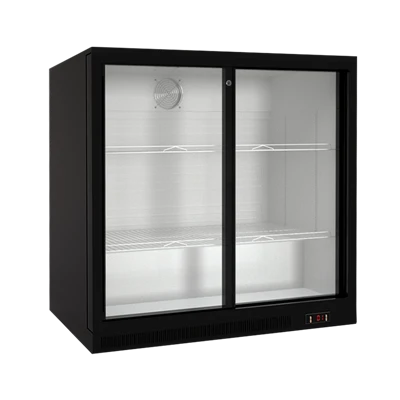
Last month, I stood in the loading bay of my warehouse, watching a flatbed trailer haul a batch of commercial refrigeration units toward a grocery chain two hours outside the city. The delivery driver called to say the store’s cooling system had failed during a 12-hour power outage that had crippled the entire region, and half their fresh produce section—$18,000 worth of peaches, lettuce, and dairy—had turned to mush before repairs even began. That moment drove home a truth I’ve been wrestling with for years: when businesses call us for commercial cooling equipment, they’re not just buying compressors and coils. They’re buying a lifeline. And power outages are the single biggest threat to that lifeline, one that hits harder than most owners or managers realize, both operationally and financially. Commercial Cooling Equipment
I started this company 14 years ago, after 10 years working as a service tech for a big-box HVAC chain. Back then, I’d show up to fix a broken walk-in cooler at a restaurant after a power outage, only to find the owner throwing out $5,000 worth of stored meat and desserts. At the time, I thought it was just part of the job—bad weather, old grids, random breakdowns. But over the years, as I’ve worked with clients across retail, food service, healthcare, and manufacturing, I’ve seen power outages do way more than just spoil food. They warp equipment, raise long-term energy bills, put customer trust at risk, and even disrupt entire supply chains, all for an event that’s becoming more common. The US Energy Information Administration reported that between 2000 and 2021, the average American experienced 8.2 hours of power outages per year, up from 4.2 hours in the 1990s. And a 2023 study from the Edison Electric Institute found that commercial outages last an average of 2.8 hours longer than they did a decade ago, driven by extreme weather, aging infrastructure, and higher demand during peak summer and winter months. For commercial cooling systems, every minute of that outage counts.
Let’s start with the most immediate, visible impact: product loss. For a grocery store, a 10-hour outage can mean a 30-40% loss of perishables, according to the National Restaurant Association. But it’s not just grocery chains. Last year, I worked with a craft brewer that lost 1,200 gallons of unfiltered beer during a four-day outage when a storm took down the substation serving their production facility. The beer was close to fermenting, and once temperatures spiked above 75 degrees, the batch was undrinkable—cost them $22,000 in raw materials and lost revenue from a pending order with a local distributor. For pharmaceutical companies, it’s even higher stakes: a 2019 report from the Centers for Disease Control and Prevention found that 15% of temperature-sensitive medications can degrade to unsafe levels after just four hours without power, leading to costly recalls and regulatory penalties. I’ve also worked with small independent pharmacies that stock vaccines and specialty medications; a single outage can mean losing months of inventory that can’t be replaced quickly, leaving them unable to serve patients who rely on those drugs.
But what most people don’t see is the hidden damage power outages do to the cooling equipment itself, damage that doesn’t show up until days or weeks later, leading to expensive repairs and unplanned downtime. When power is restored after an outage, the sudden surge of electricity that flows back to the grid is called a “transient overvoltage,” and it’s a killer for commercial cooling compressors. Compressors are the heart of any cooling system—they do the heavy lifting of pumping refrigerant through the coils to keep temperatures low. When a power outage cuts out mid-cycle, the compressor’s internal parts come to a stop, and if power comes back too quickly, the sudden jolt can bend motor windings, crack valve plates, or burn out the start capacitor. I saw this firsthand with a client who owned a 10,000-square-foot cold storage warehouse. After a three-hour winter outage, their generator kicked on, but the transfer switch failed, and power surged into three of their five compressor units. By the time a tech arrived, two compressors were totaled, and the third needed a full rebuild—costing over $12,000 in parts and labor, on top of $20,000 in frozen product loss. The worst part? If they’d installed a simple surge protector or a properly sized backup generator, that damage could have been prevented.
Another less talked about impact is the strain on system efficiency and lifespan after an outage. When cooling systems cycle on and off repeatedly during and after a power disruption, they work much harder than normal. Every time the compressor kicks on, it needs extra power to build pressure, and repeated start cycles wear down internal components faster. Over time, this can add 15-20% to annual energy bills, according to a study from the American Society of Heating, Refrigerating and Air-Conditioning Engineers (ASHRAE). I track data on our client systems, and we’ve noticed that commercial cooling units that go through more than two power outages a year have a 30% higher failure rate within three years, compared to systems in areas with very few outages. That means businesses are not only paying for emergency repairs, but also replacing their cooling equipment years earlier than expected, adding to long-term operational costs.
Then there’s the reputational impact, which is often even harder to quantify than financial costs. When a restaurant’s walk-in cooler goes out during a power outage, they can’t serve menu items that rely on fresh ingredients, or they have to limit service to only items that don’t need refrigeration. Last summer, a popular coffee shop I work with had a two-and-a-half hour outage during a peak Saturday morning rush. They had to throw out all their cold brew, milk, and pastries, and posted on social media saying they’d be closed until the power came back. By the time service resumed, they’d lost almost half their daily sales, and 20% of their regular customers commented that they wouldn’t wait for them to fix their backup power before coming back. For grocery stores, it’s even more visible: when customers walk past empty shelves where lettuce or milk used to be, it erodes trust that they’ll be able to rely on the store for their regular needs. A 2022 survey from the National Retail Federation found that 62% of consumers would switch to a different store after experiencing one or more outages that left products spoiled. For small businesses, that kind of customer loss can put them out of business entirely.
The good news is that there are solutions that mitigate these impacts, and over the years, I’ve worked with hundreds of businesses to tailor cooling systems that can handle power outages. It’s not just about adding a big generator—though that’s part of it. It’s about choosing the right type of cooling equipment, installing surge protection, setting up proper backup power, and creating maintenance plans that catch small issues before they turn into big problems. For example, variable-speed compressors, which are becoming more common in commercial cooling, are much more resilient to power surges than traditional single-speed compressors. They can adjust their power usage gradually, so when power is restored, they don’t get hit with the same jolt that damages older units. We also work with clients to install automatic transfer switches, which switch power from the grid to a backup generator within 10 seconds of an outage—fast enough to keep most cooling systems running without a dip in temperature.
I’ll never forget the craft brewer I mentioned earlier. After that outage, they came to us to redesign their entire cooling and backup power system. We installed two redundant variable-speed compressor units, a 50kW backup generator, and a monitoring system that alerts their facility manager at the first sign of a power dip or equipment issue. Last winter, when a snowstorm took down power for 18 hours, their system never missed a beat. No product loss, no equipment damage, no lost revenue. They told me that investment paid for itself in the first three months after the outage, when most other breweries in the area were throwing out batches and losing orders.
But here’s the thing: no matter how much you plan, power outages will still happen. The grid is aging, extreme weather events are only getting more frequent, and businesses can’t control when a storm or an equipment failure takes down power. What they can control is how their commercial cooling system is built to handle those events. For too long, businesses see commercial cooling as a one-time purchase, not as a critical system that protects their inventory, their revenue, and their reputation. After 14 years in this industry, I can tell you that the cost of upgrading your cooling system to handle power outages is almost always less than the cost of a single outage.
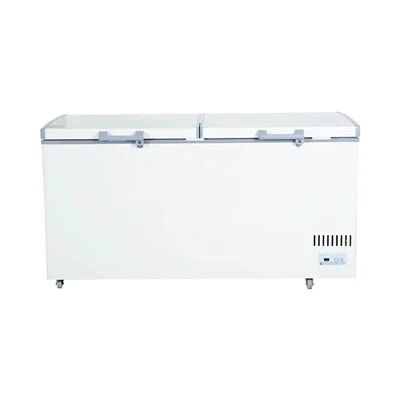
Beverage Cooler If you’re a business owner or facility manager who’s dealt with product loss, equipment damage, or downtime because of power outages, we can help. We don’t sell one-size-fits-all cooling solutions—we work with you to assess your specific needs, whether you’re a small restaurant, a grocery chain, a cold storage warehouse, or a pharmaceutical facility, and design a system that keeps your operations running when the grid goes down. We offer free consultations, custom equipment quotes, and ongoing maintenance plans to make sure your system is always ready. If you’d like to learn more about how we can help protect your business from the impacts of power outages, reach out to us to schedule a purchasing consultation.
References
- U.S. Energy Information Administration. (2022). Annual Electric Power Industry Report. Retrieved from EIA.gov
- Edison Electric Institute. (2023). 2023 Commercial Power Outage Trends Report. Retrieved from EEI.org
- National Restaurant Association. (2022). Food Service Emergency Preparedness and Resilience Study. Retrieved from Restaurant.org
- Centers for Disease Control and Prevention. (2019). Temperature Requirements for Storage of Medications and Vaccines. Retrieved from CDC.gov
- American Society of Heating, Refrigerating and Air-Conditioning Engineers (ASHRAE). (2021). Efficiency Impacts of Power Outages on Commercial HVAC Systems. ASHRAE Journal, 63(7), 45-52.
- National Retail Federation. (2022). Retail Resilience During Power Disruptions Consumer Survey. Retrieved from NRF.com
Zhejiang Xingbao Electrical Appliances Co., Ltd.
As one of the most professional commercial cooling equipment manufacturers and suppliers in China, we also support customized service. Welcome to wholesale bulk high quality commercial cooling equipment in stock here from our factory. If you have any enquiry about pricelist, please feel free to email us.
Address: No. 10 Baisha Road, Lianhang Development Zone, Chang’an Town, Haining City, Jiaxing City, Zhejiang Province, China
E-mail: zjxingbao@gmail.com
WebSite: https://www.sunborncn.com/
