Let’s cut to the chase: if you’re a factory manager, production lead, or ops guy who’s ever stood around loading 500lb engine blocks, stamping 100lb steel sheets, or hauling pallets full of 800lb raw parts, you know two things—first, it’s back-breaking work that’s brutal on your team, and second, messing that up costs you downtime, safety fines, and missed deadlines. That’s exactly why industrial robots for heavy-duty tasks are such a game-changer right now. As someone who’s supplied these robots for over a decade, I get the questions: How do they even lift that much without breaking? What makes them better than just hiring more folks? And no, it’s not just “they’re strong.” There’s a lot of smart engineering behind the scenes that keeps these bots running round the clock without a hiccup. Industrial Robots
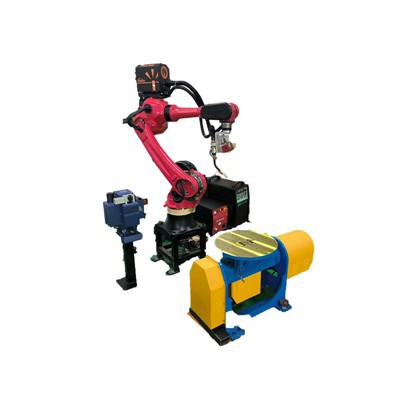
First off, let’s bust the myth that all industrial robots are just “big arms.” Heavy-duty models—we call them “payload robots” around the shop—are built totally different from the small, delicate bots you see on assembly lines gluing phone screens or picking small parts. Their whole core is optimized for pulling, pushing, and hoisting way more than the standard 10 or 20kg bots. Let’s start with the backbone: most heavy-duty robots use a rigid, high-torque structural system called a serial-link manipulator, but with beefed-up actuators. Wait, actuators are basically the robot’s muscles, right? For light bots, you might get a small servo motor that moves a joint with a tiny gear. For heavy-duty? We use harmonic drives and strain-wave gears that are way sturdier—they can handle 1,000kg+ of payload without twisting, warping, or skipping a beat. I’ve seen a 6-axis robot lift a 1,200lb industrial press part like it’s a laptop, and that’s not luck. The ratio of torque to weight on these gears is insane—way higher than what you’d get in a consumer robot arm.
Then there’s the frame. Lightweight bots use aluminum frames to keep them nimble, but heavy-duty ones? A lot of them are cast from ductile iron or high-grade steel, or even carbon fiber reinforced plastic for parts that need strength without extra weight. Wait, carbon fiber sounds fancy, but it’s actually perfect here— it’s 5 times stronger than steel for half the weight, so the robot can move heavy payloads without dragging around tons of extra mass. That cuts down on energy use too, which is a win for your utility bills. We tested a carbon-framed robot vs. an all-steel one last year; the carbon model used 18% less juice doing the same heavy lift, and that adds up over 10,000 cycles a week.
But here’s the part most people miss: heavy-duty robots don’t just rely on brute force. They have a whole load management system that’s like a robot’s brain for not breaking things. It’s not just slamming a payload around—there’s a load cell at the end of the arm (the tool plate, where you attach your gripper or suction cup) that constantly measures the weight of what you’re moving, even tiny shifts. Then the robot’s controller adjusts the torque on each joint in real time. If you have a 700lb pallet, it doesn’t just crank up the power— it smooths out the acceleration and deceleration so you don’t spill stuff, or worse, tip the robot over. We had a customer last year who tried to cut corners by putting a lighter robot on a heavy pallet task; the controller kept shutting down because it couldn’t stabilize the load, and they were losing $2,000 a day in downtime before they switched to our 1,000kg payload model. That’s the difference between a robot built for light stuff and one built for heavy duty.
Safety is another big one, especially for tasks that are high-risk. You can’t just have a big robot moving tons of weight around a factory floor where your workers are moving too. Heavy-duty robots have way more advanced safety features than the standard models. First, there’s force sensing in every joint—if the robot bumps into something, even with a few ounces of force, it stops immediately. Some of our newer models have a collaborative mode for when workers need to be nearby, so it slows down and reduces torque when someone is close, but can crank back up when they’re gone. We’ve seen way fewer workplace injuries since we switched these in, and our customers love that OSHA doesn’t bug them as much about heavy load tasks. Oh, and most heavy-duty robots also have overload protection—if you try to lift more than their rated payload (we always tell people never to do this, by the way), it’ll lock up instead of snapping a joint or bending the frame. That’s a non-negotiable for us; we’ve had customers who ignored that rule end up with a $15,000 repair bill from a broken arm, so we make sure to hammer that home in every training session.
Wait, let’s talk about common heavy-duty tasks that these bots nail, because it’s not just lifting. A lot of people think “heavy duty” is just moving big things, but it’s also tasks that put a lot of stress on the robot itself. Like welding thick steel parts—heavy-duty welding robots can handle 500lb parts that standard bots can’t reach or support. Or forging, where you’re hitting a part with thousands of pounds of force; these robots can position the part perfectly every time, so you don’t get defects. Another big one is palletizing for warehouses—stacks of 1,000lb pallets that you need to move 20 times an hour. I’ve seen a single robot do the work of three guys on palletizing, no overtime, no calling out sick. That’s the real value proposition here: it’s not just about strength, it’s about consistency. Humans get tired, their arms ache, they make mistakes. Robots don’t. They’ll do 10,000 heavy lifts with the same precision as the first one.
But here’s the thing—you can’t just buy any heavy-duty robot and plug it in. You have to set it up right. A lot of new customers come to us saying “I need a robot that can lift 800lb,” and we have to ask them about the reach, the environment, the task. If you’re lifting parts that are 10ft apart, you need a longer arm (a higher reach) that can still handle 800lb at the end—some robots have higher payloads close to the base, but way less at full extension. That’s a common mistake. Also, the environment matters: if you’re in a foundry where it’s 120 degrees and full of dust, you need a robot with a higher IP rating (Ingress Protection) so it doesn’t get gummed up or overheat. We have specific heavy-duty models for harsh environments, and that’s something we don’t just advertise—we tailor each robot to the customer’s exact task. For example, a steel mill customer last year needed a robot to move hot billets, so we added a heat shield around the electronics and a water-cooled arm to keep it from warping. That’s not a one-size-fits-all solution, which is why a lot of big box robot suppliers are too generic for heavy duty.
Another point: maintenance. Heavy-duty robots aren’t “set it and forget it” things, but they’re way lower maintenance than human workers doing the same task. We tell customers to do a quick check every week—look at the grease levels in the gears, make sure the cables aren’t frayed, and calibrate the load cells once a month. That’s 30 minutes a week, vs. the hours of downtime and injury risk from human workers doing heavy lifting. I’ve had customers who’ve run the same heavy-duty robot for 7 years with only minor repairs, no major overhauls. Compare that to replacing a worker every 3-5 years, plus insurance, overtime, training— the ROI here is real. We usually tell customers they’ll recoup their investment in 18-24 months, depending on the task.
Wait, let’s address the elephant in the room: some people think robots are taking jobs, but from what I’ve seen, they’re actually changing jobs. Instead of having workers do the heavy, dangerous lifting, they’re having workers manage the robots—program them, fix minor issues, monitor the line. That’s higher-skill work that pays better, and it reduces turnover because no one wants to do back-breaking work for 10 years. Our customers say their retention rates went up 40% after adding heavy-duty robots, because their team isn’t exhausted every day. That’s a big win for both the business and the workers.
So if you’re dealing with heavy-duty tasks—lifting, welding, palletizing, forging, anything that’s straining your team or causing downtime—don’t just go for the biggest robot you can find. Look for one built with robust actuators, a rigid frame, smart load management, and safety features tailored to your environment. And if you’re not sure what you need, just reach out—we’ve helped hundreds of companies size up the right robot for their exact task, no sales pitch, just straight talk. We don’t push robots that are too big or too small; we make sure they get something that works for them, not just something that makes us money.
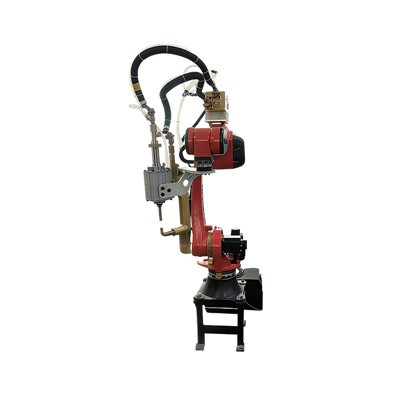
Nail Gun Robot At the end of the day, industrial robots for heavy-duty tasks aren’t just strong—they’re smart. They combine engineering, sensor tech, and real-time adjustment to do work that’s impossible for humans to do safely, consistently, and profitably. If you’re tired of your team burning out on heavy tasks, or you’re losing money to downtime and injuries, let’s talk. We can walk you through what’s worked for other customers, show you case studies, and help you find a solution that fits your needs. No fluff, no hidden fees—just real robots that get the job done.
References
- International Federation of Robotics. (2023). Industrial Robot Payload Capacity: Trends and Applications. World Robotics Report.
- Robotic Industries Association. (2022). Heavy-Duty Robot Design and Safety Standards. ANSI/RIA R15.06-2022.
- American Foundry Society. (2021). Robotic Applications for Heavy Metal Forming and Handling. AFS Journal of Metalcasting.
- Carbon Fiber Reinforced Polymer Association. (2020). Lightweight Materials in Industrial Robot Frame Design. CFRP Industry Technical Bulletin.
- Occupational Safety and Health Administration. (2023). Ergonomic Guidelines for Manual Material Handling and Industrial Robot Integration. OSHA Publication 3317-07R.
Dongguan Chuanglida Intelligent Equipments Co., Ltd.
As one of the most professional industrial robots manufacturers and suppliers in China, we also support customized service. Please feel free to buy discount industrial robots in stock here from our factory. For price consultation, contact us.
Address: Room 201, Building 2, No. 61, Shachang 1st Road, Dalang Town, Dongguan City, Guangdong Province
E-mail: haoguangli001@outlook.com
WebSite: https://www.boruntestech.com/
