If you’ve ever installed an induction heating power supply only to have it underperform, overheat, or fail to deliver consistent, reliable heat to your workload, you’ve likely run into the same issue that plagues most first-time users of this technology: a mismatch between the power supply and the load. As a supplier who’s spent 12 years working directly with metal fabricators, heat treaters, and custom parts manufacturers, I can tell you this isn’t a problem with bad equipment—it’s a problem with skipping the critical steps to align your power supply to your specific heating application. I’ve seen it happen with small 2kW units for brazing small copper fittings and 500kW systems for forging automotive axles alike, and the fix always starts with understanding how induction heating works at its core, then translating that into actionable, practical steps to get your match right. Induction Heating Power Supply
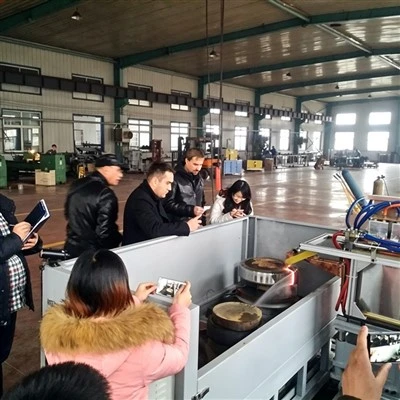
Let’s start with the basics, because too many people skip this part when they’re in a rush to get their line up and running. Induction heating works by generating a high-frequency alternating current (AC) in a power supply, which is sent to a work coil. That coil creates an oscillating magnetic field, which induces eddy currents in the metal part (the load) placed inside it. The resistance of the metal to these currents generates heat, right? Well, the efficiency of this entire process—meaning how much of the power from the supply actually turns into usable heat in your load—depends almost entirely on how well the coil (which acts as the intermediate between the power supply and the load) and the supply itself are tuned to the electrical characteristics of the load. If the impedance of your entire circuit (coil plus load) doesn’t match the output impedance of your power supply, you’ll lose power as waste heat in the coil, overwork the power supply’s IGBTs or capacitors, and end up with uneven, too-slow heating. It’s like trying to fit a square peg in a round hole: it might go in for a second, but it will cause damage and never perform as intended.
First, let’s break down the key variables you need to measure before you even start matching anything. The two big ones are load material and load geometry, and I can’t stress enough that these are not one-size-fits-all. For example, if you’re heating a solid steel bar, the electrical resistivity of that steel changes dramatically depending on its grade (low-carbon vs. high-carbon, for example), its temperature (metals get less resistive as they heat up, but only up to a point), and even its cross-sectional area. A 1-inch solid steel rod has a totally different impedance than a 1/8-inch steel wire, even if they’re the same material. Then there’s frequency—frequency is the backbone of load matching, because it determines how deep the eddy currents go into the load skin depth, the term we use for that depth. If you use a frequency that’s too high for a thick load, the eddy currents will only heat the outer surface, leaving the core cold; too low, and you’ll waste power heating areas you don’t need, especially for small parts or surface treatments like coating curing. I once worked with a customer who tried to use a 100kW 10kHz power supply for brazing small 1/4-inch copper valves, and their process was taking three times as long as it should, with inconsistent braze joints, because the frequency was too low—they ended up switching to a 100kHz unit, and their cycle time dropped by 60% overnight. That’s the kind of difference getting frequency right makes.
Next up, the work coil. This is the most common point of mismatch, because it’s not a one-time buy-it-forget-it component. The coil’s size, number of turns, and material (we always recommend oxygen-free copper for coils, by the way—its high conductivity means less power loss in the coil itself) directly alter the impedance of the circuit. For example, if you need to heat a long, slender part like a drill bit, a single-turn coil that wraps tightly around the bit will have a lower impedance than a multi-turn coil that’s spaced further away. A mistake I see all the time is people building a coil that’s too loose around the load, which reduces the magnetic coupling between the coil and the load. Poor coupling means less power transfer, so you either crank up the power supply to compensate (which wastes energy and shortens the supply’s lifespan) or get uneven heating. We always tell customers to aim for a coil that’s 10-15% larger than the widest point of their load, with a gap of no more than 1/8 inch between the coil and the load for small parts, and up to 1/2 inch for large, bulky loads. Tighter is better, but not so tight that it’s impossible to load and unload parts quickly—cycle time is a big part of profitability, remember.
Now, the actual matching process, and this is where most people go wrong: matching networks. Induction heating power supplies are designed to operate at a specific resonant frequency, and the matching network (a set of capacitors and inductors, usually) adjusts the impedance of the coil-load circuit to exactly match the output impedance of the power supply. Most modern solid-state power supplies (which is what 90% of the market uses now, replacing old vacuum tube units) have a built-in matching network, either manual or automatic, but that doesn’t mean you can plug and play. Manual matching requires adjusting the capacitor bank to tune the resonant frequency to your load, while automatic matching (which we offer on all our mid-range and high-power units) uses sensors to adjust the network in real time as the load heats up. But automatic matching isn’t a set-it-and-forget-it fix either—you still need to tell the supply what frequency range your application needs, otherwise it will chase a resonance that doesn’t work for your load. For example, if you’re hardening the surface of a 4-inch steel axle, your resonant frequency will be around 10kHz to 20kHz, but if you leave the supply set to a default range that goes up to 100kHz, it will hunt for a higher frequency that’s not optimal for your application, leading to slow, uneven heating.
I want to share a real example that shows how getting the match right solved a big problem for one of our customers. A few years back, a manufacturer of agricultural equipment came to us with a 200kW power supply they’d bought from another supplier, and their process for forging tractor hitch pins was failing. They were getting only 60% of the rated power, the power supply was tripping on overcurrent every 15 minutes, and their forge cycle time was too long, leading to bottlenecks on their line. When our techs went on-site, the first thing we checked was the coil: they’d built a 4-turn coil for the 2-inch diameter hitch pin, spaced a full 1/2 inch away from the part, and the frequency they were using was 50kHz—way too high for a part that thick. We recalculated the required frequency using the skin depth formula: skin depth is proportional to the square root of (resistivity / (frequency * permeability)). For steel at forging temperature, that works out to needing a frequency around 15kHz for a 2-inch part. Then we built a tighter 2-turn coil, with a gap of 3/16 inch, and adjusted the matching network to resonant at 15kHz. The result? Power output jumped to 195kW, no more overcurrent trips, cycle time cut by 45%, and their defect rate dropped to near zero. That customer is still using that system today, and they’ve since bought two more units from us for additional forging lines.
Now, what are the common mistakes that lead to bad load matching, so you can avoid them? First, under-sizing the power supply. I can’t tell you how many people buy a power supply that’s just barely enough for their load, thinking they’ll save money, but induction heating is inefficient at partial loads. If you run a 10kW load on a 15kW power supply, you’ll get better efficiency than running it on a 5kW supply, because the power supply’s electronics are designed to run most efficiently at 70-80% of their rated output. Second, ignoring temperature-dependent changes in load impedance. When metal heats up, its resistivity increases (non-ferrous metals like copper and aluminum, actually, wait—no, wait, ferrous metals’ permeability drops sharply at the Curie temperature, around 770°C for steel, which is a big one. That’s a critical point: when you heat steel past Curie point, its magnetic properties change, so the impedance of the load drops suddenly, and your matching network needs to adjust to that. If your matching network isn’t dynamic enough, you’ll lose power at the exact point where you need it most, like during forging or heat treating. Third, not accounting for multiple loads. If you’re running an induction hardening line with multiple parts on a conveyor, each part has slightly different dimensions, so you need a power supply that can adjust to small changes in load without tripping or losing efficiency. Automatic matching is non-negotiable for these applications, in my opinion.
Another key point: testing before full deployment. Too many customers wait until they install the system at their factory to test it, but we always recommend doing a bench test with your actual load and a prototype coil before buying a power supply. When we work with custom customers, we offer a load testing service in our lab, where we can simulate your exact application—material, part size, heating temperature, cycle time—and determine the exact frequency, coil design, and matching network needed. This avoids the costly mistakes of installing a system that doesn’t work, or having to rework it a few months down the line. For example, a customer making surgical tools came to us last year, needing to braze tiny stainless steel joints on forceps. We tested their small 0.5mm stainless steel parts in our lab, found that the optimal frequency was 250kHz, and built a custom single-turn micro-coil. The power supply we supplied matched perfectly, with no overheating, and their braze joints were consistent within 0.1mm of tolerance—something they couldn’t get with their old system that was mismatched.
Let’s also touch on maintenance, because load matching isn’t a one-time setup. Over time, coils can get damaged, develop corrosion, or have worn connections, which changes their impedance and throws off the match. We recommend inspecting your coil and matching network every 6 months, checking for loose terminals, damaged copper, or dust buildup on capacitors (dust can change their capacitance over time, leading to mismatches). If you notice your cycle times getting longer, or your power supply tripping more often, that’s a sign that your match is off, and a quick check and adjustment can fix it. I’ve seen customers ignore this, leading to premature power supply failure, which costs thousands in downtime and repairs—way more than the cost of a simple maintenance check.
If you’re still struggling with matching your load to your induction heating power supply, don’t try to solve it alone. As a supplier, our job isn’t just to sell you a unit—it’s to make sure it works for your specific application. We offer free on-site assessments for custom applications, load testing in our lab, and ongoing support to adjust matching as your process changes. Whether you’re a small job shop heating small parts or a large manufacturer running a high-volume production line, getting that load match right is the difference between a system that’s a profit driver and one that’s a costly headache.
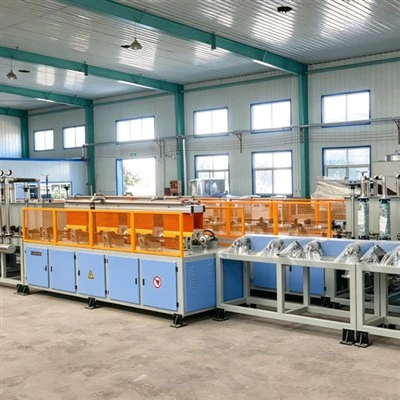
Don’t let mismatched power supplies derail your production or waste your energy. Reach out to our team today to discuss your induction heating application, and we’ll help you get the perfect match for your load.
Steel Billet Reheating Furnace References
- Zinn, S., & Semiatin, S. L. (1988). Elements of induction heating: theory, design, and applications. ASM International.
- McNicol, A. (2009). Solid-state induction power supplies: principles and applications. Induction Heating Society.
- Davies, M., & Simpson, P. (1979). Induction heating handbook. McGraw-Hill.
- Bloomenthal, A. (2000). Modern induction heating: principles and practices. CRC Press.
Hebei Yuantuo Electromechanical Equipment Manufacturing Co., Ltd.
As one of the most professional manufacturers and suppliers of induction heating power supply in China, our products have good reputation in the market. Please rest assured to buy advanced equipment made in China here and get quotation from our factory. Customized orders are welcome.
Address: Yanshan Street West and Jialingjiang Road North, Economic and Technological Development Zone, Wuqiao County, Cangzhou City, Hebei Province, China
E-mail: yuantuotech01@gmail.com
WebSite: https://www.yuantuoem.com/
