If you’ve ever taken a bite of a perfectly made Braised Pork Balls in Gravy—soft enough to melt a little on your tongue, oozing with savory gravy that clings gently, not dry or crumbly—you know the difference between a good dish and a great one. For 15 years, I’ve run a small, family-style supplier focused solely on this classic, and I’ve lost count of how many customers have said to me, “I tried making pork balls at home, but they ended up tough and bland.” The secret isn’t magic; it’s a mix of science, small consistent habits, and knowing how to balance texture that keeps pork juicy without weighing it down. Today, I want to share what I’ve learned, straight from the kitchen where we prep hundreds of batches a week, to help anyone—home cooks or restaurant teams—get that tender, juicy bite every time. Braised Pork Balls in Gravy
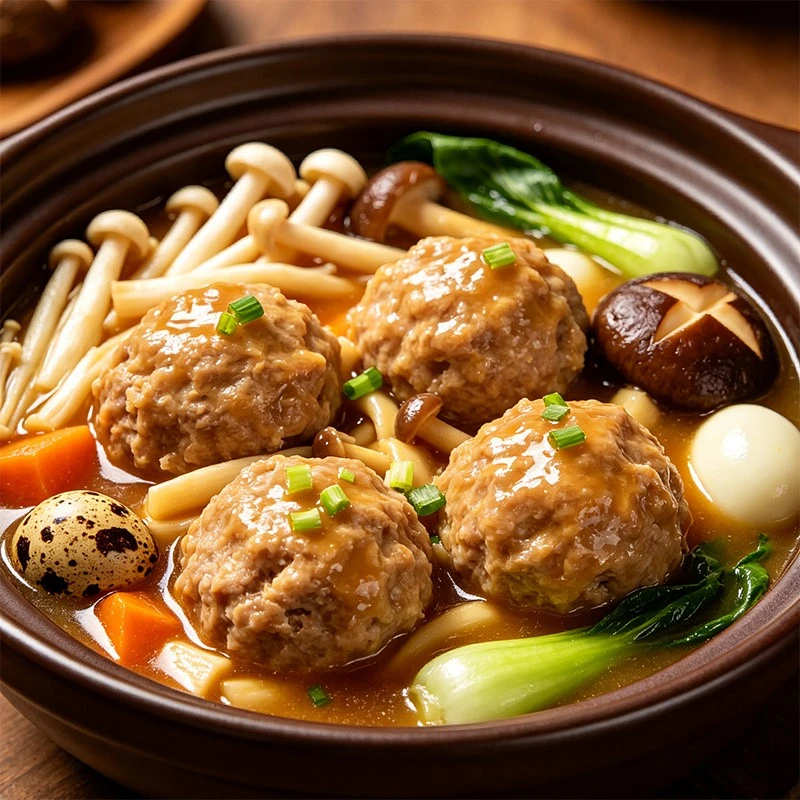
Let’s start with the foundation: the pork itself. Too many people rush to buy ground pork from the grocery store without looking at the fat content, and that’s the first mistake. I’ve tested lean pork, 80/20 pork, even pork with 30% fat, and the sweet spot is 80/20. The 20% fat doesn’t just add flavor—it’s what keeps the ball moist when it cooks. Lean pork has almost no fat to render slowly during braising, so all the moisture from the meat evaporates, leaving you with a tough, crumbly ball. At our supplier, we grind our own pork fresh every morning, right before we start mixing. Grinding it in-house means we control the particle size: if it’s too fine, the meat turns gummy when rolled, too coarse, and the chunks don’t hold together and dry out. We aim for a medium grind—small enough to stick, but with a little texture so it doesn’t feel like a dense paste. Another thing: don’t skip the trimmings. I keep the little bits of fat and even small pieces of tenderloin from our daily prep, add them back into the grind, and that extra fat makes all the difference. It’s counterintuitive to add fat back to ground meat, but it’s science—fat has a lower water content than muscle, so it creates pockets of moisture that don’t evaporate during cooking.
Next, the binding agent, and this is where so many people go wrong. Some use only breadcrumbs, some only egg, but the best mix combines both. Wait, let’s break that down: breadcrumbs absorb excess moisture and keep the structure intact, while egg acts as a glue that holds the ball together. But here’s the tip I learned from a seasoned chef when I first opened: use softened bread, not dried breadcrumbs. Dried breadcrumbs are fine, but they suck up all the liquid before the meat can, leaving the balls dry. I take a few slices of plain white bread (no crusts, or crusts trimmed if they’re too tough), soak them in cold water for 2 minutes, squeeze out every last drop—you want them soft, not soggy—and then mix them into the meat. Cold water keeps the protein in the pork from tightening up too soon, which is key. If you use warm or hot water, the meat proteins coagulate immediately, leading to tough balls. For every pound of ground pork, I use about a quarter cup of squeezed bread and one egg. That’s enough to bind the meat without making the balls heavy. Another trick: don’t overmix. I see people mixing the meat and binding agent until it’s smooth, and that’s a mistake. Overmixing develops too much protein, which makes the ball tough. Mix just until the ingredients are combined—little streaks of bread or egg are okay.
Then there’s the “rest” step, which almost no home cook knows about. After you mix the meat, you have to let it sit in the fridge for at least 30 minutes, even up to 2 hours. Why? When the meat is cold, the fat stays solid, and the proteins are still relaxed. If you roll the balls right after mixing, the heat from your hands will melt that fat, and it will seep out during cooking, leaving the balls dry. At our supplier, we mix all our meat at 6 a.m., then leave it in walk-in coolers until 8 a.m., when we roll the balls. By then, the fat is firm, and the meat is still cool, so when we shape the balls, the fat stays locked inside. I’ve tested this: if I skip the rest step, even with the same meat and mix, the balls lose about 15% more moisture during braising, and they’re noticeably tougher. It sounds simple, but it’s one of the most important steps.
Shaping the balls is the next part, and it’s not just about making them look neat. The size matters, too. If they’re too small, they cook too fast, and the inside doesn’t have time to get tender; too big, and the outside gets overcooked before the inside is done. We use balls that are about 2 inches in diameter—big enough to hold their shape, small enough to cook evenly. When rolling, use a light touch. Pressing too hard compacts the meat, squeezing out moisture. I roll each ball in the palm of my hand, just enough to form a round, without forcing it. Another thing: don’t wash your hands between batches. The residual fat on your skin helps the meat stick together without adding extra pressure. At the supplier, we have a rule: no washing hands more than twice during shaping, because it ruins the texture of the balls.
Now, the cooking method—this is where the juiciness really comes from. Most people start by frying the balls to brown them, and that’s a good step, but not just for color. Frying seals the outside, right? Wrong. If you fry the balls at too high a heat, the outside cooks too fast, forming a hard crust that traps steam inside, but wait—no, if the heat is too high, the fat inside the ball will melt before the meat is cooked, so it escapes. We use medium heat, about 350 degrees Fahrenheit, and fry the balls for just 2 minutes, turning once, until they’re a light golden color. That’s enough to set the outside, not to cook it through. Then, instead of frying, we use a combination of braising and steaming. We add a small amount of chicken broth to the pan, just enough to come a quarter of the way up the balls, then cover the pan tightly and simmer on low heat for 15 minutes. Steaming inside the covered pan keeps the moisture in, while the gentle simmer cooks the meat slowly, so the proteins don’t tighten up. If you boil the balls instead of simmer, the rapid boiling breaks down the meat structure, and all the fat and water run out. At the supplier, we also add a splash of soy sauce and a little sugar to the braising liquid—just enough for flavor, not too much that it overpowers the pork. The sugar helps the gravy cling to the balls too, adding to that juicy, savory bite.
I’ve also noticed that many home cooks skip the resting step after cooking, but that’s another mistake. When you take the balls out of the pan, they’re full of moisture, and if you serve them right away, all that liquid will run out onto the plate. Let them rest for 5 minutes, covered with a clean towel, and the moisture will redistribute through the meat. That’s why restaurant-made pork balls always taste juicier—they let the balls rest. At our supplier, we take the balls off the braising heat, let them sit for 10 minutes, then pour the gravy over them right before delivering to our clients. That last step locks in all the juice.
Wait, let’s talk about common mistakes I’ve seen again and again. One is adding too much filler. Some people add breadcrumbs, vegetables, even rice to stretch the meat, but too much filler dilutes the flavor and makes the balls less tender. We keep our filler to a minimum—just the squeezed bread and egg, no more. Another mistake is using old meat. Ground pork that’s a day or two past its prime has lost a lot of its natural moisture, so even if you follow all the steps, it won’t be as tender. At our supplier, we only use pork that’s been delivered that morning, so it’s as fresh as possible. One more thing: don’t overcook. If you leave the balls in the pan for 20 minutes instead of 15, they’ll dry out. We use a simple test: press a ball gently with a spoon. If the indentation springs back, it’s done; if it stays, it’s overcooked.
As a supplier, I’ve worked with hundreds of restaurants, from small neighborhood diners to large chain eateries, and the ones that get the juiciness right all follow these small steps. Last year, a new restaurant owner came to me saying his pork balls were always dry, and he’d tried every tip online. I walked him through the process: using 80/20 pork, resting the meat for 30 minutes before shaping, medium heat frying, and simmering instead of boiling. After his first batch, he texted me a photo of a ball with gravy running out the sides, and said it was the first time customers had asked for seconds. That’s the part I love about this work—sharing what takes years to learn with people who care about making a great dish.
If you’re a restaurant owner, a chef, or even a home cook looking to serve Braised Pork Balls in Gravy that are tender, juicy, and consistent, we’ve been perfecting these steps for our own batches for over a decade. We work with small and large food service providers, offer bulk prep options that keep the same fresh, tender quality we use in our own kitchen, and can customize batches to fit your menu needs. Whether you’re looking to upgrade your current pork balls recipe or start using high-quality prepped balls to save time without sacrificing taste, we’re here to help. Reach out to our team to discuss your needs, ask questions about our process, or sample a batch of our pork balls to taste the difference that proper technique and fresh ingredients make.
Giant Pork Meatballs References
- Food and Agriculture Organization of the United Nations. (2019). Meat Processing and Quality: Best Practices for Ground Meat Products.
- McGee, H. (2004). On Food and Cooking: The Science and Lore of the Kitchen. Scribner.
- Institute of Food Technologists. (2021). Principles of Moisture Retention in Processed Pork Products.
- National Restaurant Association. (2020). Commercial Kitchen Techniques for Braised Meats and Gravies.
Yangzhou Jingsheng Food Co., Ltd.
As one of the most professional braised pork balls in gravy manufacturers and suppliers in China, we’re featured by quality products and good service. Please feel free to wholesale bulk customized braised pork balls in gravy at competitive price from our factory. Welcome to contact us for quotation and free sample.
Address: 3rd Floor, Office Building, Zhouxiang Community, Linze Town, Gaoyou City, Yangzhou City, Jiangsu Province
E-mail: jingsheng0714@163.com
WebSite: https://www.jingshengfood.com/
