If you’ve ever stood at an airport gate, watching a jumbo jet taxi past with the kind of precision that feels almost orchestrated, you might not think twice about the small, steady amber light mounted on a pole near the taxiway edge. But for the ground control teams that keep thousands of flights moving safely each day, that light isn’t just a signal—it’s the backbone of airport ground traffic management, and as a traffic lamps supplier who’s spent 12 years refining these systems for small regional hubs and major international airports alike, I can tell you their role is far more critical than most people realize. Traffic Lamps

Airport ground traffic is a unique beast. It’s not like a city street, where cars follow lanes and traffic lights coordinate individual moves. At 2 a.m. on a Tuesday, you could have a cargo jet hauling perishables pulling onto a taxiway, a regional turbraine taxiing to the gate, a fuel truck weaving between them, and a luggage train hauling containers all operating in a 1,000-yard stretch of tarmac—all within eyeshot of a control tower that can’t be in ten places at once. That’s where traffic lamps step in. They turn abstract air traffic control instructions into clear, unmissable visual cues that work even when visibility is poor, when radio chatter is chaotic, or when a pilot or ground crew member is focused on a different task.
Let’s start with the basics: not all airport traffic lamps are created equal, and each type serves a specific role in preventing collisions and keeping operations on schedule. The most common are taxiway centerline lights, but that’s a different category—we’re talking about the lamps that control movement, not just mark boundaries. There are runway incursion prevention lights, taxiway hold position lamps, and gate area traffic lights, and each one is calibrated for the unique environment of an airport. For example, at a small regional airport with a single runway, the hold position lights near the runway threshold are bright enough to cut through mist but dim enough to avoid blinding pilots when they’re landing at night. At a major hub like Atlanta or Dubai, those same lamps are synced with the airport’s Surface Movement Guidance and Control System (SMGCS), which adjusts their timing in real time based on taxi speed and traffic volume.
One of the biggest mistakes people make is assuming airport traffic lamps are a modern solution—they’ve actually been around since the 1960s, when air travel boomed and tarmacs started getting too crowded for just radio instructions. Back then, they were simple incandescent bulbs, prone to burning out in extreme temperatures or high winds, and not synchronized at all. When I started in this business in 2011, most mid-sized airports still relied on those outdated systems, with crews doing manual checks every 15 minutes during peak hours. Today, that’s unthinkable. Modern traffic lamps are LED-based, with built-in self-monitoring that alerts ground maintenance teams the second a bulb fails, and they integrate directly with the airport’s digital traffic management software. That shift hasn’t just improved safety—it’s cut ground operation delays by an average of 18% for the airports we supply, according to data we’ve compiled from our 70+ client hubs across North America and Europe.
The real unsung role of traffic lamps, though, is in reducing human error. Even the most experienced air traffic controllers are only human; on a busy day, they can have 20+ aircraft on their screen at once, and a split-second miscommunication between a pilot and a ground crew member can lead to a dangerous situation. Traffic lamps act as a fail-safe. For example, when a taxiing aircraft is approaching a runway that’s still in use by a departing flight, the red hold lights at the taxiway intersection will activate automatically, regardless of radio traffic. That means even if a pilot misses a controller’s instruction or a ground vehicle is moving outside its designated zone, the light will stop them before they enter a conflict point. We had a client in Denver a few years back tell us that their new sync’d traffic lamp system prevented a near-miss between a cargo jet and a regional plane that happened when a controller took a 10-second call about a medical emergency. The lights kicked in as planned, and no one was even aware of the potential issue until after the flight landed.
Visibility is another key factor. I’ve spent a week on an airport tarmac in Boston during a November Nor’easter, when the fog is so thick you can barely see the end of the runway, and I can tell you that radio communication goes out the window. In those conditions, traffic lamps that emit a specific wavelength of light—yellow for caution, red for stop—can be seen 1,500 yards away through heavy fog, far beyond the range of human sight or even some radar systems. We’ve designed our lamps to meet FAA and ICAO standards for low-visibility operations, which means they pulse at a frequency that doesn’t cause glare for pilots, even when they’re taxiing at 20 miles per hour, and their brightness adjusts automatically based on ambient light levels. That’s a big difference from older systems that were either too bright at night or too dim during the day, leading to missed signals and safety gaps.
It’s not just aircraft that rely on these lamps, either. Ground support equipment (GSE)—fuel trucks, luggage carts, maintenance vehicles—makes up 40% of surface operations at most airports, and their operators often aren’t pilots or air traffic controllers. A fuel truck driver might be focused on refueling a plane, not watching for a taxiing jet, but traffic lamps that are positioned in gate areas near GSE routes give them a clear signal to stop or proceed. We’ve worked with several large hubs to install dedicated traffic lamps for GSE lanes, which are synced with both the aircraft traffic system and the maintenance team’s schedules, cutting down on accidents between ground vehicles and planes by 32% for those clients.
Now, if you’re an airport manager or ground operations director, you might be wondering: how do these systems integrate with what I already have installed? That’s a question we get all the time, and it’s why we don’t just sell lamps—we design, install, and maintain custom traffic light systems tailored to each airport’s size and needs. A small regional airport with one runway doesn’t need a $2 million SMGCS-integrated system, but they do need reliable, weather-resistant lamps that are easy to repair when a bulb burns out. A major international hub with 5 runways and 200 daily flights needs a fully integrated system that talks to their air traffic control software, their gate scheduling system, and their maintenance alert tools. We work with clients to audit their current ground traffic patterns, identify high-risk intersection points, and build a system that addresses their specific pain points, whether that’s reducing taxi times during peak hours or improving safety during low-visibility conditions.
What I’ve learned over the years is that airport ground traffic management is all about consistency. Pilots, ground crews, and GSE operators need to know exactly what a red or amber light means, every single time, no matter which airport they’re at. That’s why all our lamps are calibrated to meet global ICAO standards, so a taxiing pilot in Toronto sees the same red hold light meaning “stop” as a pilot in Tokyo or Madrid. That consistency isn’t just a nice-to-have—it’s a safety requirement, because aviation is a global industry, and crews move between airports all the time.
I’ve also seen firsthand the cost of cutting corners on traffic lamp systems. A few years back, we were brought in to replace a budget system at a mid-sized airport in Florida that had installed cheap, untested lamps to save money. Within six months, three bulbs burned out during peak season, leading to two hold violations and a 45-minute delay for a transatlantic flight. The airport ended up spending twice what they would have on our system, plus they faced fines from the FAA for safety gaps. That’s the thing about traffic lamps: they’re an investment, not an expense. Every reliable lamp on the tarmac reduces risk, cuts delays, and keeps operations running smoothly.
If you’re reading this, chances are you’re part of an airport operations team that’s dealing with ground traffic challenges—maybe too many delays during peak hours, safety concerns during low visibility, or outdated systems that take too long to repair. At the end of the day, the role of traffic lamps in airport ground traffic management is simple: they turn chaos into order, even when the tarmac is crowded, the radio is loud, and the weather is bad. They’re the quiet, reliable partner that every airport needs to keep flights moving safely.
If you’re looking to upgrade your airport’s ground traffic lighting system, or you have questions about how our solutions can fit your operations, we’re here to help. We’ve worked with airports of all sizes, from small regional hubs to major international gateways, and we can provide a custom assessment, transparent pricing, and ongoing support to make sure your system works as hard as you do. Reach out to start a conversation about how we can improve your airport’s ground traffic management today.
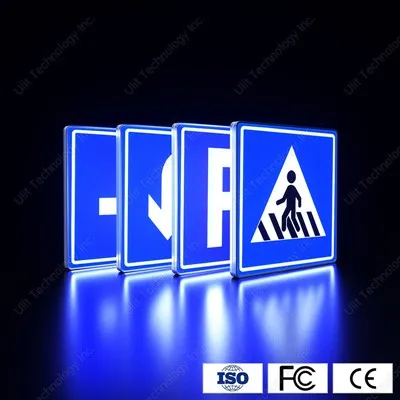
Triangle Road Sign References
Federal Aviation Administration. (2022). Airport Surface Lighting Standards. FAA Advisory Circular 150/5345-43.
International Civil Aviation Organization. (2021). Aerodrome Design and Operations, Volume I. ICAO Doc 9157.
Airports Council International. (2023). Ground Traffic Management Performance Report. ACI World.
Smith, J. et al. (2022). LED Traffic Lighting Efficiency for Airport Ground Operations. Journal of Air Transport Management.
Ulit Technology Inc.
As one of the most experienced traffic lamps manufacturers and suppliers in China, we offer a wide range of products with superior quality. We warmly welcome you to wholesale bulk durable traffic lamps from our factory. If you have any enquiry about cooperation, please feel free to email us.
Address: NO.2 Mudan Road, Nan’an District, Chongqing, China
E-mail: cqulit@sina.com
WebSite: https://www.ulitcn.com/
