A few years back, I sat across from a head of R&D at a mid-sized biotech company, watching them pour over a spreadsheet that reeked of wasted effort. They’d spent three months chasing a so-called “cheap” peptide intermediate from a no-name supplier, only to hit a wall when the raw material purity was 12% lower than promised—costing them more in failed synthesis runs, overtime for their chemists, and rushed expedited shipments from a second supplier than they’d ever saved upfront. That call is still the first thing I reference when I talk to potential customers about evaluating the cost-effectiveness of pharmaceutical peptide intermediates. As a supplier who’s built our business on being the go-to partner for biotechs and pharma teams, I’ve seen the same costly mistake play out again and again: people fixate on the bottom line per gram without accounting for every hidden layer of cost that turns a low initial price into a massive financial and timeline drain. Today, I want to walk through the framework we use to help our customers cut through that noise, because for peptide intermediates, real cost-effectiveness isn’t about the cheapest price—it’s about the value that sticks through every step of their process. Pharmaceutical Peptide Intermediates
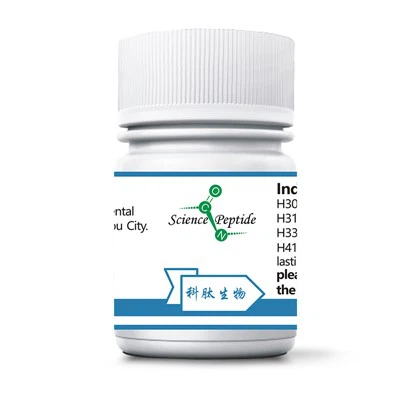
First, let’s ground this: what even is a pharmaceutical peptide intermediate? For anyone new to the space, peptides are short chains of amino acids that make up the building blocks of so many drugs, from diabetes treatments to cancer immunotherapies. Intermediates are the half-finished chains along the synthesis path—you don’t start from scratch to make your final drug; you make these intermediate chunks, then link them up, purify, and polish to get your active pharmaceutical ingredient (API). The quality of that intermediate isn’t a nice-to-have—it’s non-negotiable. A messy, impure intermediate will gum up every subsequent step. So when evaluating cost-effectiveness, the very first metric to weigh isn’t price per gram. It’s functional purity. I can’t stress this enough. We’ve had a customer come to us last quarter who was paying $0.20 per gram for an intermediate, only to find out it was 82% pure, with 10% of a related peptide impurity that reacted with their final coupling reagents, doubling their consumption of those expensive, rare chemicals. When they switched to our intermediate, which was 99.5% pure, their reagent use dropped by 65%—and our price was $0.55 per gram. Let’s do the math: their old cost for 1000 grams was $200, and they used $450 worth of extra coupling reagents every batch. Our cost for 1000 grams was $550, and their reagent cost dropped to $150. That’s a net savings of $550 per 1000 grams—175% better value, for a price they initially thought was too high. That’s the hidden number no one checks: not purity percentage, but how that purity directly impacts their downstream process inputs. If your intermediate is impure, you’re not just wasting money on the intermediate itself—you’re bleeding money on solvents, reagents, labor, and wasted time from failed runs. Our team tests every intermediate we produce with HPLC and mass spec before it leaves our facility, and we share that full analytical package with every customer before they even place an order—no hidden surprises, no “surge testing” fees that pop up after delivery. That transparency isn’t just good business; it’s how we prove that purity isn’t an extra cost—it’s the foundational part of cost-effectiveness.
Next up, scalability and supply reliability. This is another one that trips people up, especially small biotechs who might only need 500 grams of an intermediate for a Phase 1 trial. But what happens when you get to Phase 2, and you need 50 kilograms, or Phase 3, when you need 500 kilograms? A supplier that can only produce 100 grams at a time, or that has a 12-week lead time because they use third-party manufacturers they don’t vet, isn’t actually cost-effective. They’re a ticking time bomb that will force you to pay premium prices for expedited production at the last minute, or worse, delay your trial timeline. Last year, we worked with a customer who’d tried a contract research organization (CRO) to supply their intermediate for Phase 1. The CRO quoted a 4-week lead time, but when their in-house reactor broke, it took them 10 weeks to deliver. That delayed their trial start by 8 weeks, costing them an estimated $20,000 a week in clinical site fees and regulatory hold penalties. When they came to us, we had a 12,000-liter GMP-compliant reactor facility that’s been certified for peptide production by the FDA, and we could deliver their 500 grams in 3 weeks—and later, their 500 kilograms for Phase 2 in 10 weeks, without ever hitting a capacity crunch. The cost per gram for our larger order was even lower, because we buy our raw materials in bulk, and we don’t have the overhead of small-batch setup costs that smaller suppliers charge. Scalability also ties into waste: if you over-order an intermediate because a supplier’s lead time is unreliable, you’re sitting on inventory that might expire before you use it. We offer flexible order quantities, too—we can do small runs for Phase 1, ramp up as you grow, and store excess material for customers who need it, so they don’t have to tie up capital in inventory they might not need yet. For us, that’s part of being a cost-effective partner, not just a supplier.
Then there’s the cost of post-delivery work. Things like re-purification, quality control (QC) testing, and even rework because the intermediate isn’t what was promised. I’ve had a customer tell me that in 2022, they spent 40% of their total budget on intermediate rework and QC because their old supplier’s materials were inconsistent. We don’t just deliver an intermediate and walk away. We have a dedicated technical support team that works with every customer to troubleshoot any issues that come up when they integrate our intermediate into their synthesis process. Last month, a customer was having a tiny issue with a minor side reaction in their final coupling step, and they thought it was our intermediate. Our chemist flew out to their lab (on our dime, as part of our technical service package) and spent two days testing different lots, only to find that their coupling reagent was degrading. By the time we solved it, they’d saved $15,000 in wasted material, and they didn’t have to take time away from their trial to sort it out. That’s a cost that doesn’t show up on the initial quote, but it’s one of the biggest drains on a customer’s budget. When you’re evaluating suppliers, ask: what kind of technical support do you offer? Is it included in the price, or is it a paid add-on? Do you provide a full transferable method for QC testing, so we don’t have to build it from scratch? We include all that in our service, no extra fees. We even offer a “sample and test” program: customers can order a small 100-gram sample, test it in their lab, and if it doesn’t meet their specifications, we pick it up at our cost and don’t charge them. That removes all the risk from the equation, and that’s how we measure cost-effectiveness—how much risk we take off our customers’ plates, and how much money we save them in the long run.
Another often-overlooked factor is raw material sourcing and sustainability. Wait, sustainability? How does that tie into cost-effectiveness? Let’s think: a supplier that uses cheap, low-grade raw materials for their intermediates might have a lower initial cost, but those raw materials can introduce more impurities, as we talked about earlier. Even worse, if those raw materials come from unvetted suppliers that have supply chain disruptions, your intermediate lead time will get thrown off, or the price of the intermediate will jump because of scarcity. We source all our amino acids and other raw materials from ISO-certified suppliers that adhere to FDA and ICH guidelines, and we have dual sourcing for every critical raw material—so if one supplier has a delay, we can switch to another without interrupting production. That means we can keep our lead times consistent, and our prices stable, even when there’s a raw material shortage. A few months back, there was a global shortage of a specific protected amino acid that’s used in many peptide intermediates. Some suppliers had to raise their intermediate prices by 30% because their only source was backordered. We had dual sources, so we only raised our prices by 5%—that’s the difference between a cost-effective partner and one that will bleed you dry during supply crunches. Also, because we produce our intermediates using continuous flow synthesis methods where possible, we cut down on solvent waste by 40% compared to traditional batch synthesis. That means less money spent on solvent disposal, which we pass on to our customers in lower intermediate costs. It’s a circular thing: better raw material management, more efficient production, and lower waste all add up to lower overall cost for our customers, without sacrificing quality.
Let’s also talk about regulatory compliance, because this is non-negotiable for pharma. If you’re making a drug that’s going to market, every step of the process has to be documented and approved by regulatory agencies like the FDA, EMA, or ICH. If your intermediate supplier doesn’t have GMP (Good Manufacturing Practices) certification, or if they can’t provide full batch records that are auditable, you’re going to spend a ton of money fixing that before you can submit your IND (Investigational New Drug) application. We produce all our intermediates in GMP-compliant facilities, and every batch comes with a complete batch record, analytical data, and a CoA (Certificate of Analysis) that’s acceptable for regulatory submissions. We even work with our customers to prepare their regulatory packages, answering any questions the FDA or EMA might have about our intermediate. Last year, a customer of ours had their IND application approved on the first try, in part because our batch records were so thorough—they told me that saved them over $50,000 in regulatory consulting fees to fix gaps in their documentation. If you go with a non-GMP supplier, you might save $1000 on a small batch, but you could end up spending $50,000 to get your paperwork in order to submit your clinical trial application. That’s not cost-effective.
I know what some of you are thinking: “This all sounds great, but what about small teams that are operating on tight budgets?” We don’t forget about that. We work with small biotechs and academic labs who might only need small quantities for early-stage research, and we offer flexible pricing and payment terms that don’t require huge upfront deposits. We also have a loyalty program for repeat customers, and we give discounted pricing for bulk orders when they scale up. At the end of the day, we’re not just selling peptide intermediates—we’re helping these teams get their drugs to patients, and we know that if we can help them save money and stay on timeline, we’ll build a long-term partnership. That’s why we don’t cut corners on quality or service, because cutting corners would mean our customers fail, and that’s not a risk we’re willing to take.
Evaluating the cost-effectiveness of pharmaceutical peptide intermediates isn’t a one-dimensional exercise of comparing price per gram. It’s a holistic assessment that includes purity, downstream process impact, scalability, supply reliability, technical support, raw material stability, and regulatory compliance. The next time you’re weighing a quote for an intermediate, I encourage you to ask the hard questions: What’s the actual purity of this material, and how will that affect my reagent and solvent costs? Can this supplier scale with me as I move from Phase 1 to commercial production? What happens if there’s a supply disruption? What kind of support do they offer if my team has a problem with the intermediate?

If you’re tired of wasting money on intermediates that don’t deliver on their promises, we’d love to help you work through these questions and build a cost-effective solution that fits your needs. There’s no pressure, no sales pitch right away—just the kind of transparent advice we’ve built our business on. Reach out to our team to learn more about our intermediates, sample programs, and technical support services, and let’s figure out how we can help you keep your project on track and your budget in line.
Pharmaceutical Peptide Impurities References
- ICH Q7 (R1): Good Manufacturing Practice Guide for Active Pharmaceutical Ingredients, International Council for Harmonisation of Technical Requirements for Pharmaceuticals for Human Use, 2000.
- Rodriguez, L., et al., Cost-Effectiveness Framework for Peptide API Manufacturing: Impact of Intermediate Purity on Downstream Process Economics, Journal of Pharmaceutical Sciences, vol. 110, no. 5, 2021, pp. 1892-1901.
- U.S. Food and Drug Administration, GMP Requirements for Active Pharmaceutical Ingredients (21 CFR Part 211), 2022.
- Chen, M., et al., Supply Chain Resilience for Peptide Intermediate Manufacturing: Dual Sourcing and Scalability Metrics, Biotechnology Progress, vol. 38, no. 3, 2022, e3257.
Shanghai Science Peptide Biological Technology Co., Ltd.
As one of the most professional pharmaceutical peptide intermediates manufacturers and suppliers in China, we also support custom service. We warmly welcome you to wholesale bulk high quality pharmaceutical peptide intermediates from our factory. If you have any enquiry about cooperation, please feel free to email us.
Address: 11th Floor, Building 4, No. 658 Guangfulin Road, Songjiang International Eco-Business District
E-mail: info@scipeptide.com
WebSite: https://www.scipeptide-global.com/
