If you’ve ever spent time in a warehouse, a grocery backroom, or even a moving truck, you’ve definitely seen collapsible plastic crates—they’re the workhorses that quietly keep goods moving every single day. As someone who’s been in the business of supplying these crates for over a decade, I get questions all the time: “How much weight can one of these actually hold?” “Can I stack three full ones on top of each other without breaking the bottom ones?” The answer ties back to load distribution, a term that sounds technical but is actually super straightforward once you break it down. And since I’m the guy helping businesses pick the right crates for their specific needs, I’m going to walk you through exactly what that means, no fancy jargon required. Collapsible Plastic Crates
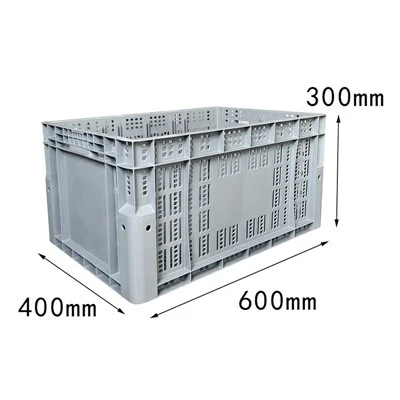
First, let’s start with the basics: what is load distribution, when it comes to collapsible plastic crates? Simply put, it’s how the weight of whatever you’re putting into the crate (plus any extra weight from stacking or movement) gets spread out across the entire crate’s structure. If that weight isn’t spread evenly, you get weak points—like a corner that snaps, a side that bows, or a crate that cracks mid-shift on a truck. That’s not just a hassle; it’s costly. Damaged goods, downtime in warehouses, having to replace crates mid-shipment—none of that’s fun.
Now, not all collapsible crates are the same, right? I’ve worked with clients who use ours for produce, electronics, pharmaceuticals, and even auto parts. Each industry has different load needs, so load distribution changes depending on the crate’s design. Let’s break down the key factors that play into this, because they’re not random—there’s actual engineering that goes into it, even if you don’t notice it when you’re grabbing one off a shelf.
First up: the plastic material itself. Most collapsible crates are made from HDPE (high-density polyethylene), and sometimes PP (polypropylene) for stiffer applications. HDPE is flexible, durable, and resistant to impacts, but its load-bearing capacity depends on its thickness and molecular structure. Thicker walls mean more material to spread weight, but too thick and the crate becomes hard to collapse, which defeats the purpose of collapsible designs. At my company, we test every batch of plastic to make sure it’s exactly balanced—thick enough for heavy loads, thin enough to fold flat for storage. That balance is critical for proper load distribution; if the plastic is too thin, weight concentrates too much in small areas, and you get those cracks I mentioned earlier.
Next, the crate’s design features. Let’s talk about the base first—this is where most load problems start when stacking. Our crates have a grid-like base, not a solid sheet, with reinforced corner posts and edge ribs. Those ribs and corners aren’t just for show; they’re built to take the brunt of stacked weight. If you had a solid base, weight would sit flat across the bottom, but a grid base lets the load spread through the structural ribs to the corners, which are the strongest parts of the crate. I see a lot of cheaper knockoff crates online that skip these reinforced corners, and within a few uses, those corners snap—suddenly the entire stack collapses, taking whatever’s inside with it. We make sure every corner post has double the plastic thickness of the side walls for that exact reason.
Then there’s the side walls and handles. Handles are another part of load distribution that people overlook. If you’re lifting a full crate by the sides, the handles need to be strong enough to spread that weight along the sides, not just pull on a small section. Our crates have integrated handles that are molded as part of the side wall, not just glued or bolted on—so when you lift, the weight spreads evenly along the entire side, instead of putting all pressure on a tiny handle spot. For heavy-duty crates meant for 50+ kg loads, we add extra reinforcement along the sides to prevent bowing. A bowed side doesn’t just look bad; it creates uneven stacking pressure when you put another crate on top, which leads to shifting and damage.
Now, let’s get to the actual load numbers, because that’s what most people actually care about. When we talk about load capacity for collapsible crates, we usually split it into two types: static load and dynamic load. Static load is how much weight the crate can hold when it’s sitting still—like stacked in a warehouse or a storage facility. Dynamic load is how much it can hold while it’s moving—on a truck, a forklift, or a conveyor belt. Those numbers are different, and that’s a big mistake a lot of first-time buyers make. They look at the static load rating and assume that’s how much they can stack, but dynamic load is lower because movement creates extra stress.
For our standard collapsible crates, the static load is around 500 kg, which means you can stack up to 5 full crates on top of each other without issues. The dynamic load is around 150 kg, so a single crate can hold up to 50 kg of goods safely while being transported. But wait—this isn’t a one-size-fits-all. We make heavy-duty crates for clients who need higher capacity: their static load can go up to 1,000 kg, and dynamic load up to 300 kg, perfect for things like automotive parts or bulk hardware. The light-duty crates, used for things like small packaged groceries or office supplies, have a static load of 200 kg and dynamic of 20 kg, which is more than enough for their needs.
But here’s the thing: even if your crate has a 500 kg static load rating, that doesn’t mean you can cram 500 kg of unevenly shaped goods into it. That’s where load distribution really comes in. If you put a bunch of heavy, sharp metal parts all in one corner of the crate, even if the total is 400 kg, that weight is concentrated on a small area of the base. The corner posts weren’t built to take that much concentrated weight, so you’ll get a crack in that corner, or the base will sag. Our advice to every client is to distribute the weight evenly, center heavy items, and make sure nothing sticks out over the edges of the crate. That’s the simplest way to make sure your crates last longer, no matter how heavy the load.
Another big factor in load distribution: how you stack the crates. I’ve seen warehouses stack crates directly on top of each other, shifting them so the corners of the bottom crate line up with the edges of the top one. That’s a recipe for disaster. The only safe way to stack collapsible crates is to make sure the bottom of the top crate sits evenly on the reinforced base and corner posts of the bottom one. Our crates are designed with stacking notches—little indentations on the bottom that line up with the corners of the crate above. That ensures the weight from the top crate is spread across the entire bottom structure of the lower one, not just a few spots. Skipping those notches leads to uneven stress, broken crates, and even safety issues if a stack collapses.
What about special use cases? We’ve had clients use our crates for cold storage, like in refrigerated warehouses or for shipping frozen food. The cold can make plastic more brittle, which changes how load distribution works. In those cases, we recommend using our heavy-duty HDPE crates, which are formulated to resist brittleness at low temperatures. We also tell them to reduce the static load by about 20% for cold storage, since the plastic’s load-bearing capacity drops a little in freezing conditions. Same goes for high-temperature use—like crates used in baking or food processing plants, where they might be near ovens. The PP crates handle higher temps better, so we suggest those for those applications, as their load distribution stays consistent when heated.
Now, let’s talk about common mistakes I see customers make, because these are avoidable and save a ton of money. First, buying crates based only on price, not load distribution. A cheap crate might have a similar label saying “500 kg static load,” but if the corners are thin, or the base is made of flimsy plastic, that number is useless. We test every single crate we ship—we stack them with 500 kg of weight for 72 hours straight, check for any bowing, cracks, or deformation. Cheap crates fail that test every time. Second, overloading dynamic capacity. I had a client last year who was loading 60 kg of electronics into a crate rated for 50 kg dynamic load, and they were stacking three crates high on a delivery truck. By the time the order arrived, half the crates had cracked, and $12,000 worth of goods were damaged. That was a preventable mistake—they just didn’t understand the difference between static and dynamic load, or how important even load distribution is during movement. Third, mixing different crate brands. If you have crates from two different suppliers, their stacking notches or base designs might not line up, so you can’t get even load distribution when stacking. It’s way better to stick with one supplier for all your crates, so you know they work together.
What does all this mean for you, if you’re in the market for collapsible plastic crates? It means load distribution isn’t just a technical detail—it’s the thing that keeps your goods safe, your crates intact, and your operations running smoothly. When you’re choosing crates, don’t just look at the max weight rating. Ask about material thickness, reinforced corners, stacking design, and how load is spread across the structure. If you have specific needs—like heavy loads, cold storage, or specific types of goods—tell your supplier, because they can adjust the crate design to match.

At the end of the day, I’ve been doing this long enough to know that the best crates aren’t just the ones that hold the most weight. They’re the ones that distribute that weight evenly, every single time, no matter how you use them. That’s why we invest so much in testing and quality control—we don’t want our customers dealing with broken crates or damaged goods. If you’re looking for collapsible plastic crates that are built for reliable load distribution, whether you need light-duty for retail or heavy-duty for industrial use, feel free to reach out to us. We can walk you through our different options, help you figure out exactly what load capacity you need, and make sure you get crates that will work hard for your business for years to come.
Plastic Storage Bins References
ASTM D4157, Standard Test Method for Flexural Properties of Reinforced and Unreinforced Plastic Materials
Plastics Industry Association (PlasticsEurope), Load Capacity Guidelines for Rigid and Collapsible Plastic Containers
Warehousing Education and Research Council (WERC), Material Handling Equipment Best Practices for Retail and Industrial Storage
Ningbo Simple Trading Co., Ltd.
Ningbo Simple Trading Co., Ltd. is one of the most professional collapsible plastic crates manufacturers and suppliers in China. With a professional production team, we are able to meet the needs of the majority of our customers. Please feel free to wholesale custom made collapsible plastic crates from our factory.
Address: Room 3136, North Building of Yinzhou Chamber of Commerce Building, No.1299, Yinxian Boulevard, Shounan Subdistrict, Yinzhou District, Ningbo City, Zhejiang Province
E-mail: Simpleexport@nbsimpletrading.com
WebSite: https://www.logisticsequipments.com/
