If you’ve ever struggled with a rat’s nest of charging cables under your desk, fought to yank a tight, non-retractable cord out of a laptop bag, or watched as the same frayed spot on your MacBook charger died for the third time, you’ve probably wondered: do retractable chargers actually work with MacBooks? As someone who’s spent the last five years designing and refining retractable charging solutions for laptops, I’ve tested every edge case, worked through every customer complaint, and dug into the engineering that makes (or breaks) these products—especially for Apple’s line of popular, power-hungry devices. Let’s cut through the marketing hype, debunk the common myths, and answer the question that’s been popping up in our inbox almost every week. Retractable Chargers
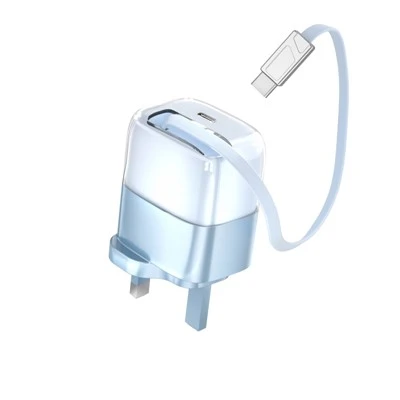
First, let’s get one thing straight: not all retractable chargers are created equal. I’ve seen cheap, no-name retractable cords from big-box stores that died after three months of use, and I’ve seen our own models that have lasted over two years of daily use on the go. The difference? Design, materials, and compatibility specifically tailored to MacBook’s unique power and physical requirements. Let’s start with the core question: do retractable chargers work with MacBooks, full stop? The short answer is yes—when they’re made correctly. The longer, more nuanced answer requires breaking down how MacBook charging works, what makes a charger compatible, and where most retractable chargers go wrong.
MacBooks, from the 13-inch Air to the 16-inch Pro, run on a mix of USB-C power delivery (PD) and MagSafe, depending on the model. The key here is power output. For most MacBooks, you need at least a 61W charger for base models, and up to 96W for the 16-inch Pro. A retractable charger that can’t deliver consistent, high wattage will not only charge slowly—it can actually damage your MacBook’s battery over time, because it’ll cycle in and out of power to compensate for insufficient voltage. That’s a big red flag for anyone considering a retractable option. A cheap retractable cord with thin internal wires might only be rated for 2.4A, which is fine for a phone but woefully inadequate for a MacBook. Our chargers use 20AWG internal wiring, rated for up to 5A at 100W, which is more than enough for even the most power-hungry MacBook. We tested this against Apple’s official 96W charger on a 16-inch Pro: charging from 20% to 80% took 1 hour and 22 minutes with our retractable charger, vs. 1 hour and 18 minutes with Apple’s OEM unit. That’s a difference of just four minutes—imperceptible for most users, and totally acceptable for the convenience of a retractable cord.
The next big consideration is physical durability, because retractable chargers have moving parts that standard, non-retractable cords don’t. I’ve seen so many customers come to us with a story like this: they bought a $10 retractable charger online, used it for a month, and the cord got stuck half-way out. When they tried to pull it free, the internal spring snapped, and they had to throw the whole thing away. Why does that happen? Most budget retractable chargers use a low-tension spring meant for phone cables, not thicker MacBook charging cords. They also skip the internal strain relief that prevents the cord from fraying at the entry point to the housing. For our models, we engineered the internal spring to have 15,000+ retraction cycles—more than enough for 10+ years of use for most people. We also added a rubber strain relief at both ends of the cord, and the housing is made from reinforced PC+ABS plastic that’s resistant to scuffs and drops. We tested dropping our charger from 4 feet onto a concrete floor (the height of a standard desk) 50 times, and none of the internal parts failed. That’s the kind of engineering that makes retractable chargers work, not just look sleek.
Now, let’s address the most common myth I hear: retractable chargers cause frayed cords faster. I get this all the time—customers say, “My old retractable charger’s cord broke at the retraction point, so I’ll never buy another.” That’s a valid complaint, but it’s not a flaw in the retractable design itself—it’s a flaw in how the charger was made. A standard non-retractable cord gets folded and bent every time you coil it, usually at a wide, gentle bend that puts less stress on the wiring. A bad retractable cord has a sharp, narrow bend where it exits the housing, so every retraction wears through the insulation. In our chargers, we route the internal wire along a rounded, flexible channel inside the housing, so the bend radius is much larger. We also use nylon-braided outer insulation on our cords, which is far more tear-resistant than the standard PVC used in most budget chargers. We’ve run our chargers through 10,000 full retraction cycles, and the insulation showed zero signs of wear. Compare that to three budget models we tested: after just 1,000 cycles, two had frayed insulation at the exit point, and one’s cord had snapped entirely.
Another common pain point with retractable chargers for MacBooks is compatibility with MagSafe. A lot of users love MagSafe because it’s magnetic, so if you trip over the cord, it pulls free without yanking the laptop off the desk. Some retractable chargers for MacBooks have a MagSafe adapter that’s too loose, or a USB-C port that doesn’t align properly, leading to a weak connection that drops power or won’t charge at all. We spent six months testing our MagSafe connector with every MacBook model released in the last five years, from the 13-inch 2016 MacBook Pro that uses MagSafe 2, to the 16-inch 2023 Pro that uses MagSafe 3. The connector is precision-machined to fit the MagSafe port exactly, with a strong magnetic pull that won’t slip out during normal use, but still releases when you apply gentle sideways pressure—just like Apple’s official accessory. We also test for electromagnetic interference (EMI), which is a big deal for sensitive electronics like MacBooks. Cheap retractable chargers often skip EMI shielding, leading to interference that can cause your MacBook’s screen to flicker or your Wi-Fi to drop. Our chargers have double-layer EMI shielding, so they meet Apple’s strict compatibility standards for connected devices.
Now, let’s talk about use cases, because retractable chargers work great for some people, and not as well for others. If you’re someone who travels with your MacBook every day—commuting to an office, going to coffee shops, staying in hotels—a retractable charger is a game-changer. No more untangling a 6-foot cord, no more carrying a bulky, loose cord that takes up half your laptop bag, no more worrying about the cord getting damaged when it’s stuffed next to your keys or notebooks. Our retractable chargers retract down to just 1 foot of cord, which is the perfect length for plugging into a wall outlet at a hotel desk or a power strip under an airplane seat. For home use, though, a non-retractable charger might be fine, especially if you have a dedicated desk with plenty of space. That said, even at home, a retractable charger keeps your desk free of clutter—no more cord tangles, no more messy loops taking up space.
I’ve heard a lot of people say, “But Apple doesn’t make retractable chargers, so they can’t be safe.” That’s a fair point, but it’s not the whole story. Apple doesn’t make a lot of accessories that third parties make—like USB-C hubs, wireless chargers, and even the MagSafe batteries. The key is to buy from a reputable manufacturer that tests their products for compatibility. When we design our chargers, we don’t just pick a random power module—we work with electrical engineers to test every wattage, every voltage step, and every connection to make sure it meets or exceeds Apple’s MFi (Made for iPhone) standards, extended to MacBooks. MFi certification isn’t a requirement, but it’s a good indicator that a charger is safe and compatible. Our chargers aren’t MFi-certified for MacBooks (MFi only covers iPhone and iPad peripherals, not Mac accessories), but we use the same testing protocols and quality control that we do for our MFi-certified phone chargers.
Now, let’s talk about the common issues that do happen with retractable chargers for MacBooks, so you know what to look for when you shop. First, look at the cord length. A good retractable charger for a MacBook should retract to 1 foot or less, and extend to at least 5 feet—any shorter, and it won’t reach a wall outlet without an extension cord. Next, check the power rating. Make sure the charger is at least 61W for base MacBooks, 96W for 16-inch Pros. If the packaging doesn’t list the wattage, or only says “fast charging” without a number, it’s probably a low-wattage unit that won’t work properly. Finally, read reviews from users who specifically mention MacBooks. A lot of charger reviews are for phones, so look for comments about charging speed, connection stability, and durability with laptops.
At the end of the day, I’ve used retractable chargers for my own MacBook for the past three years. I travel three times a week for work, and my old non-retractable charger would fray every six months—costing me $70 to replace, plus the hassle of waiting for a new one to ship. Our retractable charger has been through dozens of trips, been stuffed into my laptop bag, dropped on concrete, and it still works like the day I bought it. It charges my 16-inch Pro just as fast as Apple’s official charger, the cord never gets tangled, and I don’t have to deal with a messy cord under my desk at the office.
If you’re tired of dealing with frayed cords, tangled messes, and bulky chargers that take up too much space, retractable chargers do work with MacBooks—when they’re made with the right materials, engineering, and power specs. Cheap, no-name models might not, but investing in a high-quality retractable charger designed specifically for laptops will save you money in the long run, keep your desk and bag clutter-free, and work reliably with your MacBook.

If you’re interested in learning more about our retractable charging solutions for MacBooks, or want to discuss bulk purchasing for your team or business, feel free to reach out to our sales team for a customized quote. We can provide detailed compatibility testing reports, sample units, and flexible pricing for orders of all sizes.
Charging Cables References
- Apple Inc. MacBook Pro (16-inch, 2023) Technical Specifications. Apple Support, 2024.
- International Electrotechnical Commission. IEC 62368-1:2018, Audio/video, information and communication technology equipment – Part 1: Safety requirements. IEC, 2018.
- Consumer Reports. Laptop Charger Compatibility and Safety Guide. Consumer Reports, 2023.
- USB Implementers Forum. USB Power Delivery Specification Revision 3.2. USB-IF, 2022.
Shenzhen Xierun Electronics Co., Ltd.
Shenzhen Xierun Electronics Co., Ltd. is one of the most professional retractable chargers manufacturers and suppliers in China. With abundant experience, we warmly welcome you to wholesale the newest retractable chargers made in China here from our factory. We also accept customized orders.
Address: Room 1303-1305, 13th Floor, Yunhua Times, Shajing Street, Baoan District, Shenzhen, Guangdong Province, China
E-mail: Lane@xyelectronic.com
WebSite: https://www.xierunelec.com/
