As a steel barrel supplier who’s spent the last 12 years helping businesses move, store, and protect everything from industrial chemicals to artisanal food products, one of the most common questions I get is this: “What’s the capacity of a 20-inch steel barrel?” It might sound like a simple question at first, but if you’ve ever had to source barrels for a specific job—whether you’re a small manufacturer mapping out storage space, a logistics coordinator calculating freight weight, or a craft brewer testing a new batch of beer for bulk fermentation—you know that a generic answer just doesn’t cut it. Today, I’m breaking down the science behind a 20-inch steel barrel’s capacity, the factors that can shift those numbers, and why it matters more than you think for your operations. Steel Barrel
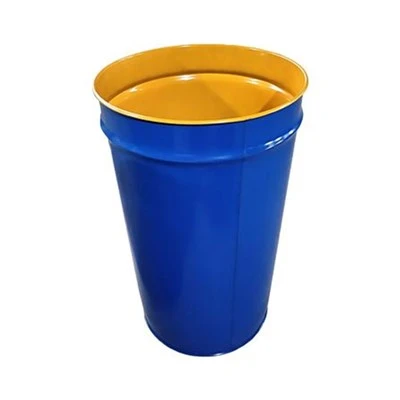
First, let’s get one thing straight: when you hear “20-inch steel barrel,” that measurement almost always refers to the internal diameter, right? Wait, no—wait, let’s clarify that right up front, because mix-ups here are the #1 reason for ordering the wrong size. For steel barrels, there are two critical dimensions: internal diameter (ID) and external diameter (OD). A 20-inch barrel’s nominal 20-inch measurement is actually the external diameter, not the internal one. The steel wall of a standard drum is 12 gauge, which works out to about 0.1046 inches thick. So if the external diameter is 20 inches, the internal diameter is roughly 19.79 inches. That tiny difference isn’t just a technicality—it means the space you have for product isn’t exactly a circle with a 20-inch radius. It’s a fraction smaller, and that adds up when you’re filling dozens or hundreds of barrels.
Next, capacity comes down to volume, and for a cylinder, volume is calculated using the formula V = πr²h, where π is roughly 3.1416, r is the internal radius of the barrel, and h is the internal height. That’s the basic math, but here’s where most people go off the rails: 20-inch steel barrels aren’t one-size-fits-all when it comes to height. Standard steel drums—you know, the 55-gallon ones everyone recognizes—have a nominal height of 34.9 inches, but a 20-inch barrel? Wait, no, the 20-inch measurement is diameter, height is a separate variable. Wait, let’s set that straight: if you’re talking about a small, portable steel barrel (often used for waste, chemicals, or specialty storage), a 20-inch diameter barrel usually comes in two common heights: 25 inches and 30 inches. Let’s run the numbers for both, because that’s where the real capacity lives.
First, let’s confirm the internal radius for our 20-inch nominal diameter barrel: as we said, external diameter is 20 inches, wall thickness 0.1046 inches, so internal diameter is 20 minus (2 x 0.1046) = 19.7908 inches, so internal radius r is half that, or 9.8954 inches. Now, take the first common height: 25 inches. Plug that into the volume formula: V = 3.1416 x (9.8954)² x 25. Let’s calculate that step by step: 9.8954 squared is about 97.92, multiplied by 25 is 2448, multiplied by 3.1416 is roughly 7690 cubic inches. Now, if you’ve ever worked with volume conversions, you know liquid volume in inches translates to gallons, and one US liquid gallon is equal to 231 cubic inches. So divide 7690 by 231, and you get about 33.3 gallons. That’s the capacity for a 20-inch diameter barrel that’s 25 inches tall—about 33 gallons.
Now the other common height: 30 inches. Same internal radius, 30 inches height. V = 3.1416 x 97.92 x 30. That works out to about 9228 cubic inches. Divide by 231, and you get roughly 40 gallons. Wait, so is that all? Not so fast. Because here’s another factor: most steel barrels have a small domed top and bottom, not flat ends. That dome, usually about 2 inches deep on each end, means you can’t use the full height of the barrel for product. If you have a barrel with a 30-inch nominal height, the usable internal height—subtracting the depth of both domes— is actually around 26 inches, not 30. Let’s adjust that calculation for the 40-gallon barrel: recalculate height to 26 inches, so volume is 3.1416 x 97.92 x 26 = about 7990 cubic inches, divided by 231 is roughly 34.6 gallons. Oh, that’s a big difference. The domes aren’t just for strength—they help the barrel withstand pressure, whether you’re storing volatile liquids or stacking barrels on a truck, but they take up valuable internal space you can’t fill.
Wait a second, though—what if you’re talking about a different type of 20-inch steel barrel? Some smaller steel pails, often called “barrels” in casual terms, have a 20-inch diameter but shorter heights, like 12 or 15 inches. Those would have capacities as low as 10 gallons. But when our customers ask about a 20-inch steel barrel, they’re almost always referring to the standard cylindrical drum used for industrial storage, not a tiny pail. That’s why clarifying the height is so important. I once had a customer who ordered what he thought was a 35-gallon 20-inch barrel, but he got a 30-inch tall dome-top barrel that only held 34 gallons. He’d miscalculated the dome height, and he ended up 50 gallons short for his production run. That’s the kind of mistake that can halt a whole operation, so I always make sure to confirm height, wall thickness, and whether the barrel is open-head or tight-head before quoting.
Wall thickness is another factor that affects capacity, too. We mentioned earlier that standard drums have 12-gauge steel, but some specialty barrels, like those designed for hazardous materials, have thicker walls—10 gauge or even 8 gauge. A thicker wall means a smaller internal diameter, right? So if a 20-inch nominal barrel has 8-gauge steel, which is about 0.1345 inches thick, the internal diameter is 20 minus (2 x 0.1345) = 19.731 inches, so internal radius is 9.8655 inches. For the same 30-inch height, that works out to about 39.5 gallons, versus 40 gallons for the 12-gauge. It’s a half-gallon difference per barrel, but if you’re ordering 1,000 barrels, that’s 500 gallons of lost storage space—enough to change how many trucks you need for delivery, or how much floor space you need in your warehouse.
Also, it’s not just liquid capacity. If you’re storing dry goods, like grains, powders, or raw materials, the volume might be measured in cubic feet instead of gallons. Let’s convert that: a 33-gallon barrel is about 4.4 cubic feet, and a 40-gallon barrel is about 5.3 cubic feet. For bulk solids, you have to account for bulk density too. For example, a cubic foot of plastic resin weighs about 30 to 35 pounds, so a 5.3 cubic foot barrel can hold around 160 to 185 pounds of resin. If you’re storing something heavier, like steel shot or chemicals, that same barrel might only hold a fraction of that, and the total weight will matter for shipping regulations. That’s why when a food manufacturer comes to us asking for barrels to store maple syrup, we not only give them the gallon capacity but also tell them the maximum weight they can safely fill, so they don’t overload their pallet jack or shipping container.
Let’s also talk about standards, because this isn’t just guesswork. In the US, steel drums are regulated by the Department of Transportation (DOT) for hazardous materials, and by the American Society of Mechanical Engineers (ASME) for pressure vessels, though most 20-inch non-pressure barrels are not ASME-coded. The Steel Drum Manufacturers Association (SDMA) sets the nominal dimensions for standard drums, so a 20-inch nominal diameter is consistent across most manufacturers, as long as you specify height and wall gauge. Internationally, there are different standards—for example, European drums might have slightly different diameter measurements, but most of our customers in North America use the SDMA standards, so that’s what we base our capacity on.
Wait, another common confusion: sometimes people mix up 20-inch barrels with the old 55-gallon drum, which has a nominal diameter of 23 inches and height of 34.9 inches. That’s a bigger barrel, obviously, with a capacity around 55 gallons. But the 20-inch barrel is smaller, designed for situations where space is tight—like under-stair storage in a small warehouse, or on smaller delivery trucks that can’t accommodate the 23-inch diameter of a standard drum. We’ve had customers in the craft beverage industry use 20-inch barrels for secondary fermentation, too, because they fit neatly in temperature-controlled coolers that are sized for smaller equipment. That’s a perfect example of how capacity and dimensions go hand in hand: you can’t just pick any barrel size, you need to match its capacity to your available space and needs.
Now, let’s get back to the real-world uses of this. If you’re a small business owner starting out, and you’re trying to calculate how many barrels you need for your inventory, knowing the exact capacity of a 20-inch steel barrel saves you from over-ordering (wasting money on extra barrels you don’t need) or under-ordering (running out of storage mid-production). For logistics teams, knowing the volume and weight capacity helps with load planning: how many barrels fit on a pallet, how many pallets fit in a 20-foot shipping container, and what the total weight will be to avoid overweight fees. For businesses handling hazardous materials, exact capacity is required by regulation to make sure the barrels meet UN ratings for their contents. A barrel that’s slightly off in volume might not pass inspection, leading to delays or fines.
I’ve been in this industry long enough to know that “average” capacity is a starting point, but every customer’s needs are unique. Last year, we had a customer who made custom cleaning chemicals for car manufacturers. He’d been using standard 55-gallon drums, but his new production line had a 20-inch diameter space allocated for storage. He thought he’d have to downsize his entire operation until he realized a 30-inch tall 20-inch barrel had a capacity close to 40 gallons—close enough to meet his needs without reworking his storage layout. That’s the kind of problem-solving we do for our customers every day: not just quoting a price, but giving them the exact dimensions and capacity they need to make their operations run smoothly.
So to sum it up, let’s cut through the jargon: a standard 20-inch steel barrel (nominal external diameter) has a capacity of roughly 33 to 40 US liquid gallons, depending on height, wall thickness, and dome depth. If you’re talking about a specialty hazardous-material barrel, that capacity might be slightly lower due to thicker walls. If you’re talking about a smaller pail-sized barrel, it could be as low as 10 gallons. But if you’re sourcing a full-size steel barrel for storage or transport, you can count on that 33 to 40 gallon range for the most common sizes.
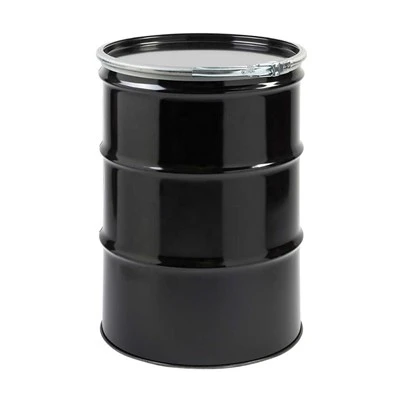
At the end of the day, the last thing any business wants is to order barrels that don’t fit their space, hold too little product, or lead to compliance issues. That’s why we make it our business to be transparent about every dimension, capacity, and specification of our steel barrels. If you’re trying to calculate how many barrels you need for your next project, have questions about weight limits, or need a custom barrel for a specific use, reach out to our team to talk through your needs. We don’t do generic quotes—we work with you to make sure you get the right barrel, at the right capacity, for your exact operation.
Steel Barrel References
Steel Drum Manufacturers Association. (2020). Standard Dimensions and Specifications for Steel Drums. SDMA Technical Bulletin 101.
U.S. Department of Transportation. (2022). Specifications for Shipping Containers for Hazardous Materials. 49 CFR Part 178.
American Society of Mechanical Engineers. (2021). Steel Pressure Vessels for General Industrial Use. ASME Boiler and Pressure Vessel Code Section VIII.
Anhui Lining Packaging Container Co., Ltd.
We are one of the most professional steel barrel manufacturers and suppliers in China, also support customized service. Please rest assured to wholesale bulk high quality steel barrel in stock here from our factory. If you have any enquiry about quotation, please feel free to email us.
Address: Maodikou Village, Dangshan County, Anhui Province
E-mail: In13905677285@126.com
WebSite: https://www.liningpack.com/
