Can an Echelle Grating be used for fluorescence spectroscopy?
As a supplier of echelle gratings, I’ve often been asked whether echelle gratings can be utilized in fluorescence spectroscopy. This is a question that delves into the intersection of two important areas of optics and spectroscopy, and the answer is a resounding yes, with some key considerations. Echelle Grating

First, let’s briefly understand what echelle gratings are. Echelle gratings are a type of diffraction grating characterized by their relatively large groove spacing (compared to traditional gratings) and high blaze angles. These features allow them to achieve high spectral resolution over a wide wavelength range in a single dispersion. Unlike conventional gratings, which often require multiple gratings or complex optical set – ups to cover a broad spectrum, an echelle grating can disperse light across different spectral orders simultaneously, enabling the measurement of a wide range of wavelengths in one go.
Now, let’s turn our attention to fluorescence spectroscopy. It is a powerful analytical technique based on the principle of fluorescence, where a molecule absorbs light at a specific wavelength (excitation) and then emits light at a longer wavelength (emission). Fluorescence spectroscopy is widely used in various fields such as biochemistry, medicine, materials science, and environmental monitoring. Applications include detecting the presence of specific biomolecules, analyzing the structure and dynamics of proteins, and assessing the quality of water by detecting contaminants.
One of the main requirements for fluorescence spectroscopy is the ability to accurately separate and detect the emission wavelengths. This is where echelle gratings shine. The high spectral resolution of echelle gratings allows for the clear separation of closely spaced emission lines. In a fluorescence spectrum, there could be multiple emission peaks, some of which might be very close in wavelength. A traditional grating might not be able to resolve these peaks clearly, leading to overlapping spectra and inaccurate measurements. An echelle grating, on the other hand, with its high – resolving power, can distinguish between these closely spaced peaks, providing more accurate and detailed information about the fluorescence emission.
Another advantage of echelle gratings in fluorescence spectroscopy is the wide wavelength coverage. Fluorescence emission can occur over a broad range of wavelengths, depending on the fluorophore being studied. For example, some organic fluorophores emit in the visible range, while others, such as quantum dots, can have emission spectra spanning from the visible to the near – infrared. An echelle grating can cover this wide range of wavelengths in a single dispersion, eliminating the need for changing gratings or using complex multi – grating systems. This not only simplifies the experimental set – up but also reduces the potential for errors associated with changing optical components.
In terms of the optical design, using an echelle grating in fluorescence spectroscopy requires a proper understanding of the spectral orders. Since echelle gratings disperse light into multiple spectral orders, there is a possibility of order overlapping. This means that the light from different spectral orders can fall on the same detector pixel, leading to incorrect spectral information. To overcome this issue, cross – dispersion techniques are often employed. A second grating or a prism is used to disperse the light in a direction perpendicular to the dispersion of the echelle grating. This creates a two – dimensional spectral image where each spectral order is separated from the others, allowing for accurate identification and measurement of the fluorescence emission lines.
The efficiency of echelle gratings is also an important factor in fluorescence spectroscopy. Fluorescence signals are often relatively weak, and it is crucial to maximize the amount of light that reaches the detector. Echelle gratings can be designed with high diffraction efficiencies at specific wavelengths or over a wide wavelength range. By choosing an echelle grating with high efficiency in the fluorescence emission region, more of the emitted light can be diffracted towards the detector, improving the signal – to – noise ratio of the measurement.
However, there are some challenges associated with using echelle gratings in fluorescence spectroscopy. One of the main challenges is the complexity of the data analysis. The two – dimensional spectral image produced by the combination of the echelle grating and the cross – disperser requires specialized software for data processing. The software needs to be able to identify and separate the different spectral orders, correct for any wavelength calibration errors, and extract the relevant fluorescence information. Additionally, the cost of an echelle grating system can be relatively high compared to traditional grating systems. This is due to the more complex manufacturing process of echelle gratings and the need for additional components such as cross – dispersers and sophisticated data analysis software.
Despite these challenges, the benefits of using echelle gratings in fluorescence spectroscopy are significant. In research laboratories where high – resolution and wide – wavelength coverage are crucial, echelle grating – based fluorescence spectrometers are becoming increasingly popular. They are enabling researchers to study more complex fluorophores and to obtain more detailed information about the fluorescence processes.
In industrial applications, echelle gratings are also finding their way into fluorescence – based detection systems. For example, in the pharmaceutical industry, fluorescence spectroscopy is used for quality control of drugs. Echelle gratings can provide more accurate and reliable data, helping to ensure the safety and efficacy of pharmaceutical products.
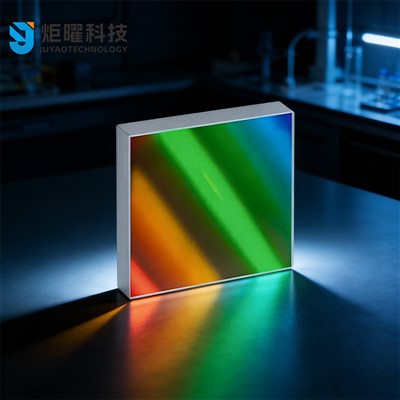
In conclusion, echelle gratings can indeed be effectively used for fluorescence spectroscopy. Their high spectral resolution, wide wavelength coverage, and potential for high efficiency make them a valuable tool in this field. Although there are challenges in terms of data analysis and cost, the advantages they offer in terms of performance make them a viable option for both research and industrial applications.
Seya-Namioka Flat-Field Concave Holographic Grating If you are involved in fluorescence spectroscopy research or industrial applications and are looking for high – quality echelle gratings, I invite you to reach out to me. We can discuss your specific requirements, and I can provide you with the best solutions to meet your needs. Whether you need a custom – designed echelle grating or a standard off – the – shelf product, our team is ready to assist you in achieving the best results in your fluorescence spectroscopy experiments.
References
- Born, M., & Wolf, E. (1999). Principles of Optics. Cambridge University Press.
- Skoog, D. A., Holler, F. J., & Crouch, S. R. (2007). Principles of Instrumental Analysis. Thomson Brooks/Cole.
- Hecht, E. (2002). Optics. Addison – Wesley.
Jilin Juyao Technology Co., Ltd.
As one of the leading echelle grating manufacturers and suppliers in China, we offer a wide range of products with superior quality. Please feel free to wholesale customized echelle grating from our factory. Welcome to view our website for more information.
Address: Room 101, No. 2 Huiwen Road, Nanguan District, Changchun City, Jilin Province, China
E-mail: jyoptix@outlook.com
WebSite: https://www.jyoptix.com/
