A space capsule is a crucial component in space exploration, serving as a protective vessel that ferries astronauts and payloads between Earth and space safely. As a leading space capsule supplier, we take pride in our in – depth understanding of how these remarkable machines operate. Space Capsule
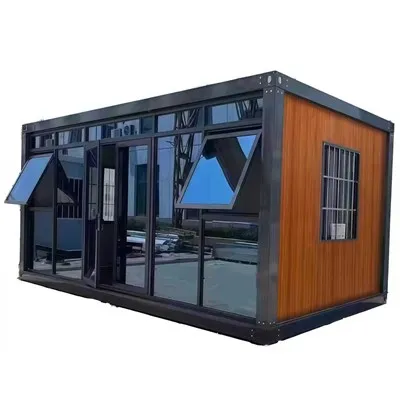
The Basic Structure and Design of a Space Capsule
The design of a space capsule is the result of meticulous engineering and scientific research. At its core, a space capsule is a compact, self – contained unit. It typically consists of three main sections: the command module, the service module, and the heat shield.
The command module is the nerve center of the space capsule. It is where the astronauts live and work during the mission. This section is equipped with a variety of control panels, navigation systems, communication devices, and life – support equipment. The layout of the command module is carefully planned to ensure that all essential functions are easily accessible to the crew. For example, the control panels are designed with ergonomics in mind, allowing astronauts to operate the capsule’s systems with precision, even in the zero – gravity environment.
The service module is attached to the command module and provides essential support functions. It houses the propulsion systems that are used for orbit insertion, course corrections, and re – entry maneuvers. The service module also stores vital resources such as oxygen, water, and fuel. The oxygen supply is crucial for maintaining a breathable atmosphere inside the capsule, while water is used for drinking, hygiene, and cooling systems. The fuel stored in the service module powers the rocket engines that enable the capsule to move through space.
The heat shield is one of the most critical components of a space capsule. As the capsule re – enters the Earth’s atmosphere, it experiences extreme temperatures due to air friction. The heat shield is designed to absorb and dissipate this intense heat, protecting the crew and the internal components of the capsule. It is made of special materials with high heat – resistance properties, such as ablative materials that gradually burn away during re – entry, carrying the heat away from the capsule.
Launch and Orbit Insertion
The journey of a space capsule begins with the launch. The capsule is mounted on top of a powerful rocket, and the rocket engines are ignited. The thrust generated by the rocket engines propels the capsule upwards, overcoming the Earth’s gravitational pull. During the launch phase, the capsule experiences high levels of acceleration and vibration. To ensure the safety and comfort of the crew, the capsule is equipped with shock – absorbing systems and restraints.
Once the rocket reaches a certain altitude, the first stage of the rocket is jettisoned, and the second stage takes over. This process continues until the capsule reaches the desired orbit. At this point, the service module’s propulsion systems are used to fine – tune the capsule’s orbit. The engines fire in short bursts to adjust the capsule’s speed and direction, ensuring that it remains in a stable orbit around the Earth.
Life – Support Systems in Space
Maintaining a habitable environment inside the space capsule is of utmost importance. The life – support systems are responsible for providing the crew with a continuous supply of oxygen, removing carbon dioxide, regulating temperature and humidity, and managing waste.
The oxygen generation system typically uses electrolysis to split water molecules into oxygen and hydrogen. The oxygen is then released into the cabin, while the hydrogen is vented into space. Carbon dioxide removal systems use chemical absorbents to trap and remove the carbon dioxide exhaled by the crew. This is essential because high levels of carbon dioxide can be toxic to humans.
Temperature and humidity control is another critical aspect of the life – support systems. The space environment is extremely cold, but the heat generated by the crew’s body metabolism, electronic equipment, and solar radiation can cause the temperature inside the capsule to rise. The temperature – control system uses a combination of insulation, radiators, and heat exchangers to maintain a comfortable temperature range. The humidity – control system removes excess moisture from the cabin air to prevent condensation, which can damage equipment and promote the growth of mold.
Waste management is also a significant challenge in space. Solid and liquid waste is collected and stored in special containers. Solid waste is often compacted to reduce its volume, while liquid waste may be treated and recycled for use in other systems, such as the water – supply system.
Navigation and Communication
Navigation is essential for a space capsule to reach its destination and perform its mission successfully. The space capsule is equipped with a variety of navigation instruments, including star trackers, gyroscopes, and GPS receivers. Star trackers are used to determine the capsule’s orientation in space by measuring the positions of stars. Gyroscopes provide information about the capsule’s rotation and angular velocity, which is crucial for maintaining stability. GPS receivers can be used to obtain accurate position information, especially during the approach to a target, such as the International Space Station.
Communication systems allow the crew to stay in touch with mission control on Earth. The capsule is equipped with radio transmitters and receivers that use different frequencies to communicate with ground stations. These communication links are used for a variety of purposes, including receiving mission instructions, reporting the capsule’s status, and conducting scientific experiments. In addition to voice communication, data can also be transmitted and received, such as telemetry data from the capsule’s sensors and images taken by the crew.
Re – entry and Landing
The re – entry phase is one of the most dangerous parts of a space mission. As the space capsule begins to re – enter the Earth’s atmosphere, it encounters a significant amount of air resistance. This friction causes the temperature of the heat shield to rise to thousands of degrees Celsius.
To ensure a safe re – entry, the capsule must enter the atmosphere at the correct angle. If the angle is too steep, the capsule will experience excessive heat and g – forces, which could be fatal to the crew. If the angle is too shallow, the capsule may skip off the atmosphere and remain in space.
During re – entry, the service module is usually jettisoned, leaving only the command module to continue the descent. The command module uses a combination of parachutes and retrorockets to slow down its descent. As the capsule approaches the ground, the main parachutes are deployed, reducing the speed to a safe landing velocity.
The landing site is carefully selected based on a variety of factors, including weather conditions, terrain, and accessibility. Once the capsule lands, recovery teams are dispatched to retrieve the crew and the capsule.
Our Role as a Space Capsule Supplier
As a space capsule supplier, we are committed to providing the highest – quality products and services. Our team of engineers and scientists works tirelessly to design and manufacture space capsules that meet the most stringent safety and performance standards.
We use the latest technologies and materials in our manufacturing process. For example, we are constantly researching and developing new heat – shield materials that can withstand even higher temperatures during re – entry. Our life – support systems are designed to be reliable and efficient, ensuring the well – being of the crew during long – duration space missions.

We also offer comprehensive after – sales support. Our technical experts are available 24/7 to provide assistance with installation, maintenance, and troubleshooting. We understand that every space mission is unique, and we work closely with our customers to customize our space capsules to meet their specific requirements.
Standard Apple Cabin If you are involved in a space exploration project or have a need for a high – quality space capsule, we invite you to contact us for a procurement discussion. Our team will be happy to provide you with detailed information about our products, pricing, and delivery options. We look forward to the opportunity to work with you and contribute to the future of space exploration.
References
- "Fundamentals of Astrodynamics and Applications" by David A. Vallado
- "Space Systems Engineering" by Peter Fortescue, John Stark, and Graham Swinerd
- "Human Spaceflight: Mission Analysis and Design" by Andrew J. Chapman and James R. Wertz
Aoborui Seiko Technology (Weifang) Co., Ltd.
As one of the most professional space capsule manufacturers and suppliers in China, we also support customized service. Please feel free to wholesale high-grade space capsule made in China here from our factory. Welcome to view our website for more information.
Address: Building 38, Zhongnan High-tech, Weifang Yuandu Huizhi Industrial Park, No. 3999, Taixiang Street, Hanting District, Weifang City, Shandong Province
E-mail: admin@sino-abr.com
WebSite: https://www.sinoabr.com/
